- Addiction
- Mental Health
- About Us
Find Treatment By
Rehabs by Location


Find Treatment By
Learn
About Us
Recovery.com combines independent research with expert guidance on addiction and mental health treatment. Our mission is to help everyone find the best path to recovery through the most comprehensive, helpful network of treatment providers worldwide.
Advisory Council
Our advisory council brings together leaders in behavioral health, technology, and business. Their diverse expertise ensures our resources and product are innovative, evidence-based, and effective. They guide our mission as accomplished individuals dedicated to improving the landscape of addiction recovery and mental wellness.



Bedrock Recovery Center
Verified Center
This provider's information has been quality-checked by Recovery.com's Research Team for accuracy and completeness, including center verification through appropriate third-party organizations.
Treatment Focus
This center treats substance use disorders and mental health conditions. You'll receive individualized care catered to your unique situation and diagnosis, learn practical skills for recovery, and make new connections in a restorative environment.
Primary Level of Care
Offering intensive care with 24/7 monitoring, residential treatment is typically 30 days and can cover multiple levels of care. Length can range from 14 to 90 days typically.
Treatment Focus
This center treats substance use disorders and mental health conditions. You'll receive individualized care catered to your unique situation and diagnosis, learn practical skills for recovery, and make new connections in a restorative environment.
Primary Level of Care
Offering intensive care with 24/7 monitoring, residential treatment is typically 30 days and can cover multiple levels of care. Length can range from 14 to 90 days typically.
Provider's Policy
Your insurance can cover all if not most of the costs involved with Drug & Alcohol Rehab. If you are not sure what your current insurance plan covers, we can help! Fill out our insurance verification form below and one of our specialists will reach out to you and review your plan in detail.
Bedrock Recovery Center
Bedrock Recovery Center
About Bedrock Recovery Center
Bedrock Recovery Center provides all the support clients need for substance use and mental health disorders in one location just a short drive from Boston. Focusing on early recovery and trauma treatment, each client’s needs and goals shape their care plan. Recovery often begins with medical detox and stabilization, followed by symptom monitoring as clients transition to residential care. Separate residential programs address addiction and mental health. Before leaving, clients meet with their care team to plan ongoing support.
Heal with a Comprehensive Framework
BRC emphasizes scientifically proven treatment options facilitated by master’s-level clinicians, including cognitive behavioral therapy (CBT), dialectical behavior therapy (DBT), community reinforcement approach (CRA), motivational interviewing (MI), group therapy, psychoeducation, and family therapy. Complementary experiential therapies, such as exercise and meditation, offer a whole-person approach to recovery.
Feel Supported by a Compassionate Team
Bedrock Recovery Center’s multidisciplinary staff strives to be culturally humble, gender-responsive, and family-centric. They collaborate with clients, their support systems, and each other to achieve recovery goals. The team includes master’s-level clinicians, an onsite psychiatrist, registered nurses, nurse practitioners, psychiatric mental health nurse practitioners, case managers, and coordinators specializing in medication-assisted treatment and aftercare, with behavioral technicians offering additional support.
Experience Hotel-Style Accommodations
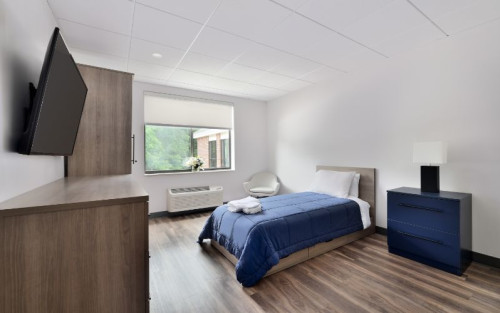
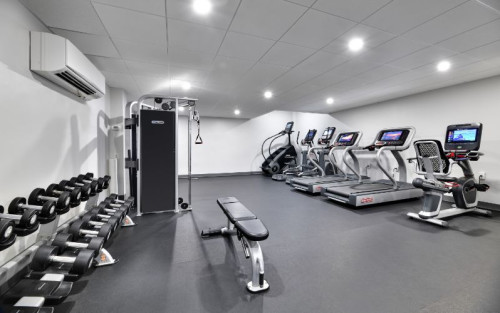
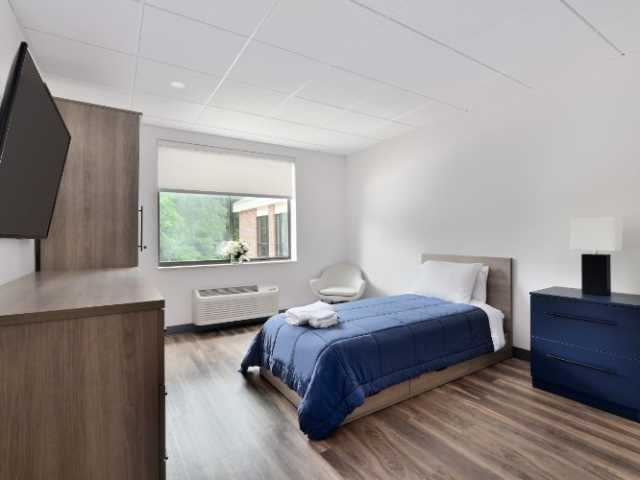
BRC’s hotel-style facility provides modern, comfortable semi-private or private rooms with en suite bathrooms. A yoga studio and fully-equipped gym help keep clients active and healthy, while Bedrock Recovery’s game room and movie theater provide outlets for fun and relaxation. Chef-prepared meals take into account any dietary restrictions, including gluten sensitivities. Outdoors, clients enjoy a sprawling outdoor patio with lawn games and a basketball court, and 6 acres of beautiful woodlands.

Highlights from the Center
Highlights
These highlights are provided by and paid for by the center.
1-on-1 Counseling
On-site Medical Detox
Trauma-Informed Care
Private Rooms Available
Center Overview
Treatment Focus
This center treats substance use disorders and mental health conditions. You'll receive individualized care catered to your unique situation and diagnosis, learn practical skills for recovery, and make new connections in a restorative environment.
Joint Commission Accredited
The Joint Commission accreditation is a voluntary, objective process that evaluates and accredits healthcare organizations (like treatment centers) based on performance standards designed to improve quality and safety for patients. To be accredited means the treatment center has been found to meet the Commission's standards for quality and safety in patient care.

Insurance Accepted










Cash Pay Rates
Estimated Cash Pay Rate
Center pricing can vary based on program and length of stay. Contact the center for more information. Recovery.com strives for price transparency so you can make an informed decision.


Recovery.com Verified Listing
Recovery.com verified that the name, location, contact information and license to operate for this treatment provider are valid and up-to-date.

ASAM Level 3.7 Certified

CARF Accredited
Joint Commission Accredited
Recovery.com is an independent, third-party mental health resource. Verification does not imply endorsement and does not guarantee the quality of treatment services.
Meet Your Care Team

Dr. Ronald Bugaoan
Medical Director
MD

Brittany Doherty
Clinical Director, Detox and Residential
MS, LADC I

Mariajose Lozada-Oliva
Program Director

Stu Johnson
Executive Director

Susan Korman
Clinical Director
MS, LMHC, LADC I

Amy Fitzpatrick
Chief Medical Officer
MD
Your Care Options
Specializations
Alcohol
Using alcohol as a coping mechanism, or drinking excessively throughout the week, signals an alcohol use disorder.
Anxiety
Anxiety is a common mental health condition that can include excessive worry, panic attacks, physical tension, and increased blood pressure.
Co-Occurring Disorders
A person with multiple mental health diagnoses, such as addiction and depression, has co-occurring disorders also called dual diagnosis.
Depression
Symptoms of depression may include fatigue, a sense of numbness, and loss of interest in activities. This condition can range from mild to severe.
Drug Addiction
Drug addiction is the excessive and repetitive use of substances, despite harmful consequences to a person's life, health, and relationships.
Young Adults
Emerging adults ages 18-25 receive treatment catered to the unique challenges of early adulthood, like college, risky behaviors, and vocational struggles.
Post Traumatic Stress Disorder
PTSD is a long-term mental health issue caused by a disturbing event or events. Symptoms include anxiety, dissociation, flashbacks, and intrusive thoughts.
Trauma
Some traumatic events are so disturbing that they cause long-term mental health problems. Those ongoing issues can also be referred to as "trauma."
Who We Treat
Executives
Executive treatment programs typically directly support the needs of people who manage businesses and may provide flexible schedules and office space to allow work during treatment.
Young Adults
Emerging adults ages 18-25 receive treatment catered to the unique challenges of early adulthood, like college, risky behaviors, and vocational struggles.
LGBTQ+
Addiction and mental illnesses in the LGBTQ+ community must be treated with an affirming, safe, and relevant approach, which many centers provide.
Men and Women
Men and women attend treatment for addiction in a co-ed setting, going to therapy groups together to share experiences, struggles, and successes.
Midlife Adults
For adults ages 40+, treatment shifts to focus on the unique challenges, blocks, and risk factors of their age group, and unites peers in a similar community.
Professionals
Busy, high-ranking professionals get the personalized treatment they need with greater accommodations for work, privacy, and outside communication.
Veterans
Patients who completed active military duty receive specialized treatment focused on trauma, grief, loss, and finding a new work-life balance.
Treatment Services
Detox
Detox fully and safely removes toxic substances from the body, allowing the next steps in treatment to begin with a clean slate.
Licensed Primary Mental Health
Some primary care providers offer mental health diagnosis and treatment. This can prevent patients from developing more serious conditions.
Residential
In a residential rehab program, patients live onsite, with access to daily treatment and 24-hour care. An average stay is 30-90 days.
Approaches
Evidence-Based
A combination of scientifically rooted therapies and treatments make up evidence-based care, defined by their measured and proven results.
Experiential
Expressive tools and therapies help patients process past situations, learn more about themselves, and find healing through action.
Individual Treatment
Individual care meets the needs of each patient, using personalized treatment to provide them the most relevant care and greatest chance of success.
Twelve Step
Incorporating spirituality, community, and responsibility, 12-Step philosophies prioritize the guidance of a Higher Power and a continuation of 12-Step practices.
Therapies
1-on-1 Counseling
Patient and therapist meet 1-on-1 to work through difficult emotions and behavioral challenges in a personal, private setting.
Animal Therapy
Animals can inspire trust and self-worth. In this experiential therapy, guided interactions are used to improve social skills and emotion regulation.
Art Therapy
Visual art invites patients to examine the emotions within their work, focusing on the process of creativity and its gentle therapeutic power.
Experiential Therapy
With this approach, patients heal by doing. Therapists help patients process difficult emotions to speak, using guided activities like art or dance.
Family Therapy
Family therapy addresses group dynamics within a family system, with a focus on improving communication and interrupting unhealthy relationship patterns.
Medication-Assisted Treatment
Combined with behavioral therapy, prescribed medications can enhance treatment by relieving withdrawal symptoms and focus patients on their recovery.
Languages
Conditions We Treat
Anxiety
Anxiety is a common mental health condition that can include excessive worry, panic attacks, physical tension, and increased blood pressure.
Bipolar
This mental health condition is characterized by extreme mood swings between depression, mania, and remission.
Burnout
Burnout entails mental and physical exhaustion, and leads to a severe lack of fulfillment. This condition is often caused by overwork.
Depression
Symptoms of depression may include fatigue, a sense of numbness, and loss of interest in activities. This condition can range from mild to severe.
Obsessive Compulsive Disorder (OCD)
OCD is characterized by intrusive and distressing thoughts that drive repetitive behaviors. This pattern disrupts daily life and relationships.
Personality Disorders
Personality disorders destabilize the way a person thinks, feels, and behaves. If untreated, they can undermine relationships and lead to severe distress.
Post Traumatic Stress Disorder
PTSD is a long-term mental health issue caused by a disturbing event or events. Symptoms include anxiety, dissociation, flashbacks, and intrusive thoughts.
Schizophrenia
Schizophrenia is a serious mental health condition that causes hallucinations, delusions, and disordered thinking.
Self-Harm
The act of intentionally harming oneself, also called self-injury, is associated with mental health issues like depression.
Substances We Treat
Alcohol
Using alcohol as a coping mechanism, or drinking excessively throughout the week, signals an alcohol use disorder.
Benzodiazepines
Benzodiazepines are prescribed to treat anxiety and sleep issues. They are highly habit forming, and their abuse can cause mood changes and poor judgement.
Chronic Relapse
Consistent relapse occurs repeatedly, after partial recovery from addiction. This condition requires long-term treatment.
Co-Occurring Disorders
A person with multiple mental health diagnoses, such as addiction and depression, has co-occurring disorders also called dual diagnosis.
Cocaine
Cocaine is a stimulant with euphoric effects. Agitation, muscle ticks, psychosis, and heart issues are common symptoms of cocaine abuse.
Drug Addiction
Drug addiction is the excessive and repetitive use of substances, despite harmful consequences to a person's life, health, and relationships.
Heroin
Heroin is a highly addictive and illegal opioid. It can cause insomnia, collapsed veins, heart issues, and additional mental health issues.
Methamphetamine
Methamphetamine, or meth, increases energy, agitation, and paranoia. Long-term use can result in severe physical and mental health issues.
Aftercare
Care Designed for Your Needs
Personal Amenities
Amenities
Special Considerations
Young Adults Program
Programs for young adults bring teens 18+ together to discuss age-specific challenges, vocational and educational progress, and successes in treatment.
Gender-specific groups
Patients in gender-specific groups gain the opportunity to discuss challenges unique to their gender in a comfortable, safe setting conducive to healing.
LGBTQ group
Group therapy unites LGBTQ+ patients in a safe and culturally competent setting, encouraging peer support under the expert leadership of a therapist.
First Responders Program
Paramedics, police officers, firefighters, and others join in a specific First Responders program, usually focused on trauma, grief, and work-life balance.
Activities
Yoga
Yoga is both a physical and spiritual practice. It includes a flow of movement, breathing techniques, and meditation.
Off-Site Amenities
Learn More About the Center
Boston’s Methadone Mile: Finding Support
In places like Boston’s Methadone Mile, opioid addiction has caused a high level of community devastation and suffering. Methadone offers a way to combat the opioid crisis by helping people stop using drugs like heroin, fentanyl, and prescription painkillers, but it is not a solution on its own.
What If My Rehab Center Is Out Of Network?
Going to an out-of-network rehab center can offer benefits such as greater flexibility, more autonomy, and a broader range of treatments.
The Benefits Of Client-Centered Therapy
Client-centered therapy is a form of talk therapy where the client does most of the talking.
How Many Times Do People Go to Rehab?
Find out why going to rehab more than once is common when working toward recovery.
What people are saying
Treatment
3.8
Accommodations
3.9
Food & Nutrition
3.9
Value
3.5
Pros
- Luxurious Accommodations (2)
- Friendly & Competent Staff (2)
- Gourmet & Nutritious Food (2)
- Treated With Respect (2)
Janet H
Treatment in 2024 • (30 days) • Reviewed 02/28/25
Former Client
•Business Owner
•Albany, NY
Brad L
Treatment in 2023 • (7 days) • Reviewed 05/01/24
Former Client
•Veternarian office
•Aniger NC
Gary
Reviewed 07/17/22
Review from Rehabs.com
Ernie
Reviewed 03/09/21
Review from Rehabs.com
Trudi
Treatment in 2021 • (30 days) • Reviewed 11/16/21
Former Client
•Cleaning business owner