- Addiction
- Mental Health
- About Us
Find Treatment By
Rehabs by Location


Find Treatment By
Learn
About Us
Recovery.com combines independent research with expert guidance on addiction and mental health treatment. Our mission is to help everyone find the best path to recovery through the most comprehensive, helpful network of treatment providers worldwide.
Advisory Council
Our advisory council brings together leaders in behavioral health, technology, and business. Their diverse expertise ensures our resources and product are innovative, evidence-based, and effective. They guide our mission as accomplished individuals dedicated to improving the landscape of addiction recovery and mental wellness.
Langley Porter Psychiatric Institute
Treatment Focus
This center treats mental health conditions and co-occurring substance use. You receive collaborative, individualized treatment that addresses both issues for whole-person healing.
Primary Level of Care
Outpatient treatment offers flexible therapeutic and medical care without the need to stay overnight in a hospital or inpatient facility. Some centers offer intensive outpatient program (IOP), which falls between inpatient care and traditional outpatient service.
This provider hasn't verified their profile's information. Are you the owner of this center? Claim your listing to better manage your presence on Recovery.com.
Treatment Focus
This center treats mental health conditions and co-occurring substance use. You receive collaborative, individualized treatment that addresses both issues for whole-person healing.
Primary Level of Care
Outpatient treatment offers flexible therapeutic and medical care without the need to stay overnight in a hospital or inpatient facility. Some centers offer intensive outpatient program (IOP), which falls between inpatient care and traditional outpatient service.
Provider's Policy
We are contracted with Blue Cross of California, Blue Cross FEP (federal employees), Cigna, Magellan, Managed Health Network (MHN), Medicare, and UBH (United Behavioral Health/Optum). We are not contracted with Aetna, Beacon, other Blue Cross plans, Blue Shield (unless mental health is managed by Magellan), or Medi-Cal.
Langley Porter Psychiatric Institute
Langley Porter Psychiatric Institute
About Langley Porter Psychiatric Institute
Part of the psychiatry department at the University of California, San Francisco (UCSF), Langley Porter Psychiatric Institute provides residential, day, and intensive outpatient (IOP) treatment for mental health conditions. They are a member of the Association for Ambulatory Behavioral Healthcare and are accredited by the Joint Commission. Their team is available on week days between 9 a.m. and 4:30 p.m. to answer questions.
Residential Care
Their residential care, lasting about 8 days, seeks to stabilize extreme symptoms and then identify an intensive outpatient or partial hospitalization program.
Day Treatment and Intensive Outpatient Care
Langley Porter Psychiatric Institute's day treatment program provides an alternative to or step down from residential treatment. Day treatment lasts about 2 weeks on weekdays from 10 a.m. to 3 p.m. They provide structured group programs, some time for individual counseling, and lunch. The morning starts with a psychotherapy group meeting that includes a mindfulness exercise, skill practice, and a check-in. After day treatment, they can provide intensive outpatient treatment. Their intensive outpatient treatment is on Mondays, Wednesdays, and Fridays for about 6 weeks. They offer meetings from 9 a.m. to noon or from 1 p.m. to 4 p.m.
The group discussions cover mental health concerns. Friday sessions can cover weekly progress and weekend planning. They request discussing co-occurring conditions like substance use and trauma during individual sessions.
Electroconvulsive Therapy
Langley Porter Psychiatric Institute provides electroconvulsive therapy (ECT) for depression, bipolar disorder, schizophrenia, and other mental health disorders. They administer 6-15 treatments for 3 hours at a time during Monday, Wednesday, and Friday morning sessions. They require a friend or family member to pick up patients after ECT treatments.
Location
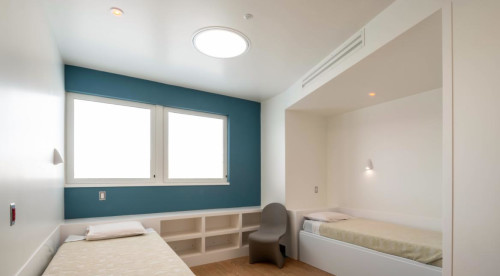
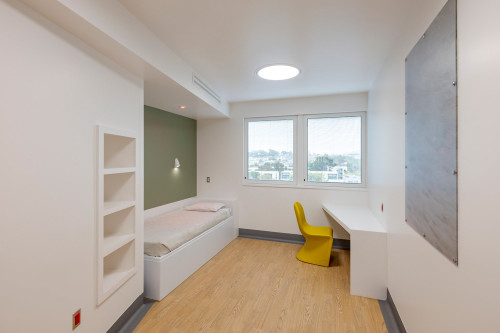
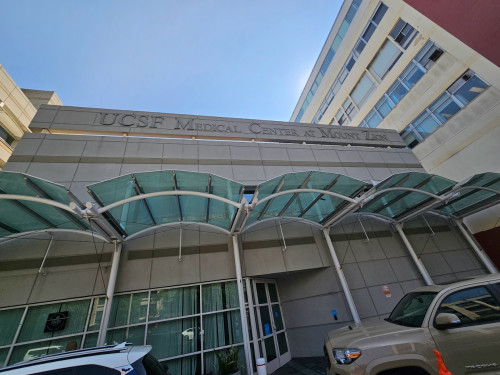
Langley Porter psychiatric Institute is inside the UCSF Medical Center at Mount Zion. The residential program has 30 beds in private and shared rooms.
Aftercare
Langley Porter Psychiatric Institute recommends meeting with a psychiatrist or therapist on a regular basis. They provide treatment notes for in the MyChart app and allow clients to purchase printed treatment notes.
Center Overview
Treatment Focus
This center treats mental health conditions and co-occurring substance use. You receive collaborative, individualized treatment that addresses both issues for whole-person healing.
Joint Commission Accredited
The Joint Commission accreditation is a voluntary, objective process that evaluates and accredits healthcare organizations (like treatment centers) based on performance standards designed to improve quality and safety for patients. To be accredited means the treatment center has been found to meet the Commission's standards for quality and safety in patient care.

Insurance Accepted






Cash Pay Rates
Estimated Cash Pay Rate
Center pricing can vary based on program and length of stay. Contact the center for more information. Recovery.com strives for price transparency so you can make an informed decision.
Levels of Care


Your Care Options
Specializations
Bio-Medical
A philosophy focusing on the biomechanics behind mental health disorders, using prescribed medications as a supplement to behavioral therapy.
Who We Treat
Men and Women
Men and women attend treatment for addiction in a co-ed setting, going to therapy groups together to share experiences, struggles, and successes.
Approaches
Bio-Medical
A philosophy focusing on the biomechanics behind mental health disorders, using prescribed medications as a supplement to behavioral therapy.
Individual Treatment
Individual care meets the needs of each patient, using personalized treatment to provide them the most relevant care and greatest chance of success.
Therapies
1-on-1 Counseling
Patient and therapist meet 1-on-1 to work through difficult emotions and behavioral challenges in a personal, private setting.
Acceptance and Commitment Therapy (ACT)
This cognitive behavioral therapy teaches patients to accept challenging feelings and make the appropriate changes to reach personal goals.
Interpersonal Therapy
This brief and structured therapy addresses present relationships and improves overall communication at work, home, and other social settings.
Meditation & Mindfulness
A practiced state of mind that brings patients to the present. It allows them to become fully aware of themselves, their feelings, and the present moment.
Languages
Conditions We Treat
Anxiety
Anxiety is a common mental health condition that can include excessive worry, panic attacks, physical tension, and increased blood pressure.
Bipolar
This mental health condition is characterized by extreme mood swings between depression, mania, and remission.
Depression
Symptoms of depression may include fatigue, a sense of numbness, and loss of interest in activities. This condition can range from mild to severe.
Schizophrenia
Schizophrenia is a serious mental health condition that causes hallucinations, delusions, and disordered thinking.
Substances We Treat
Co-Occurring Disorders
A person with multiple mental health diagnoses, such as addiction and depression, has co-occurring disorders also called dual diagnosis.