- Addiction
- Mental Health
- About Us
Find Treatment By
Rehabs by Location


Find Treatment By
Learn
About Us
Recovery.com combines independent research with expert guidance on addiction and mental health treatment. Our mission is to help everyone find the best path to recovery through the most comprehensive, helpful network of treatment providers worldwide.
Advisory Council
Our advisory council brings together leaders in behavioral health, technology, and business. Their diverse expertise ensures our resources and product are innovative, evidence-based, and effective. They guide our mission as accomplished individuals dedicated to improving the landscape of addiction recovery and mental wellness.
12 Steps of Alcoholics Anonymous: 5 Benefits from the Steps of AA

Rena Shoshana Forester is a Yoga teacher, Health & Wellness Coach, and mentor with nearly 12 years of professional international experience.

Dr. Mala, is the Chief Clinical Officer at Recovery.com, where she develops impartial and informative resources for people seeking addiction and mental health treatment.

Rena Shoshana Forester is a Yoga teacher, Health & Wellness Coach, and mentor with nearly 12 years of professional international experience.
Dr. Mala, is the Chief Clinical Officer at Recovery.com, where she develops impartial and informative resources for people seeking addiction and mental health treatment.
Many people seeking spiritual growth or wellness have found benefit from working the 12 Steps of AA with a sponsor.
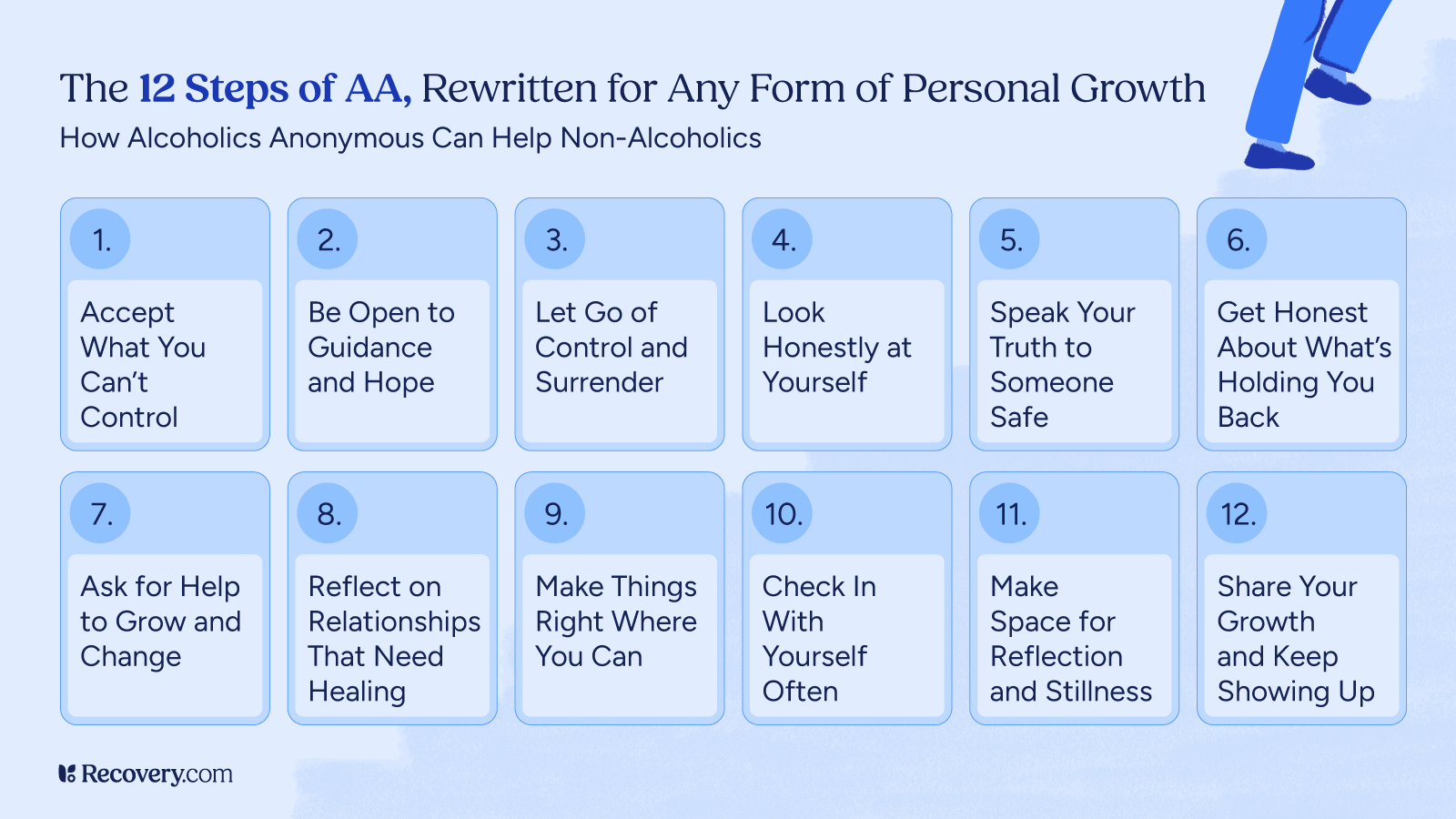
The 12 Steps of Alcoholics Anonymous are a set of guiding principles designed to help individuals recover from addiction, build connections, and lead more honest and purposeful lives. These steps rely on similar strategies found in traditional psychotherapy and have their historical roots in spiritual traditions, although they are open to anyone regardless of their belief system.

Originally created for people struggling with alcohol use by founders Bill Wilson (Bill W.) and Dr. Bob Smith, these steps have since been adapted by various recovery programs and treatment programs addressing a wide range of issues—from drugs and food to relationships and emotional challenges. The meetings are held in community-based settings, such as churches or treatment centers, and can be accessed digitally worldwide.
Have 12-Step fellowships changed since the widespread use of virtual meetings?
How Do the 12 Steps of AA Fit Into a Recovery Program?
A person may work the 12 Steps of AA while in a treatment center, in conjunction with an outpatient program, at the recommendation of a family member, or by seeking help through a helpline. The AA program strongly encourages working the steps alongside a sponsor.
Although everyone has a unique recovery journey, doing step work often goes hand in hand with reading the Big Book, joining a support group, and attending step meetings.
For many people, addiction comes with isolation, and healing truly begins in connection with others. Therefore, joining AA groups and attending meetings are highly encouraged to support one’s Twelve Step work.
The 12 Steps outline action-based principles that help individuals address their addiction(s) and grow spiritually. These steps work in harmony with the Twelve Traditions, which are guidelines that ensure group unity and focused functioning.
Richard Rohr’s book Breathing Under Water: Spirituality and the Twelve Steps, captures the essence of the 12 Steps:
We do not think ourselves into new ways of living, we live ourselves into new ways of thinking.
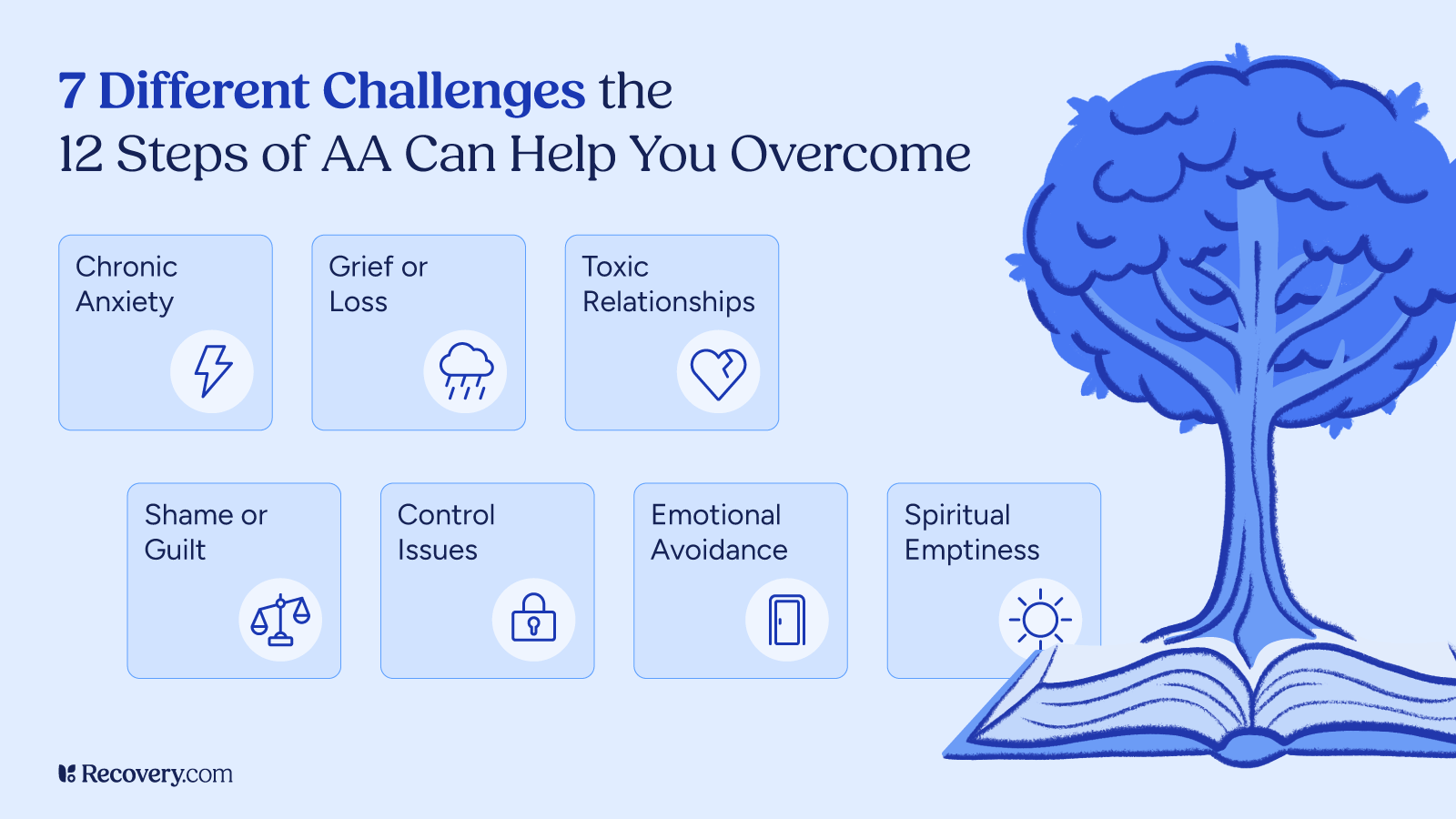
5 Benefits of AA
The following are a list of some of the benefits of working the 12-Steps. Please note that traditional 12 Step programs strongly encourage working the steps with the support and guidance of a sponsor.
1. Taking a Moral Inventory
Part of working the 12 Steps is taking a moral inventory, which involves looking deeply and honestly at oneself and becoming willing to let go of anything interfering with one’s growth.
This process involves acknowledging flaws, which can be painful and tedious. However, according to the AA program, it is essential for growth, change, healing, and recovery. By humbly letting go of negative behaviors and beliefs, we create space for new growth and improved relationships with others.
As a result of this work, done with the support of a sponsor or trusted mentor, people can develop greater tolerance, patience, kindness, and self-awareness, ultimately opening themselves up to the healing power of a Higher Power.
These benefits, based on the willingness to change, can bring a sense of peace and faith that touches all areas of one’s life.
Explore Alcohol Treatment Centers
2. Letting Go of Defects of Character
Another important part of the 12 Steps is the willingness to let go of character defects that hinder spiritual growth. Character defects often serve as coping mechanisms, ultimately preventing one from living authentically and practicing spiritual principles.
- By becoming aware of one’s character defects and developing an openness to change, people can begin to free themselves from self-destructive patterns and cultivate a readiness for transformation.
- This work is a lifelong commitment and practice that fuels one’s personal growth and connection with others.
- By becoming aware of these defects and opening ourselves to change, we begin to free ourselves from self-destructive patterns. This step requires humility and faith, which prepare us for deeper personal growth and connection with others. This step, like the other steps of AA, also requires the support of a sponsor and a recovery community.
Is there anyone who would not benefit from, or who could potentially be harmed by the 12 Steps of AA?

3. Making Direct Amends
The importance of making amends is not meant to erase guilt, but rather to restore relationships and foster spiritual growth. Other important aspects of this step include:
- Making direct amends might feel intimidating, but it is one of the most transformative parts of the 12-Step program because it allows one to humbly practice forgiveness and accountability.
- This process can be challenging, and AA strongly encourages this work to be done in community with others, including a sponsor. Having guidance and support from people who have practiced this step, themselves, is key.
- Healing can happen through the process of making direct amends. Accepting and taking responsibility for “our side of the street” can not only restore relationships, but also our sense of self and peace.
- While this is an essential part of working the 12 Steps, there are instances when making amends can cause harm (either to ourselves or to someone else). Always consult with trusted support for guidance before taking this step.
4. Taking a Personal Inventory
Daily self-reflection and action are encouraged as part of the 12 Steps to maintain spiritual progress. We can commit to identifying and correcting missteps before they escalate, as well as fostering emotional balance and self-awareness.
- By staying committed to a practice of taking personal inventory, we can learn to promptly admit mistakes, learn from our behavior, and continue making necessary amends.
- As a result, we can strengthen our relationships and, in some cases, connection with a higher power and a more resilient recovery.
Are there some principles or steps in AA that are challenging from a trauma-informed lens?

5. Exploring the Possibility of a Power Greater than Self
Having a spiritual experience or “awakening” can be part of following the steps. While this may sound overly religious or even off-putting to some, many people who participate in 12-Step programs share their experience of discovering a power greater than themselves. For some, this means God. For others, another type of higher power. Spiritual discovery can be as unique an experience as the recovery process itself.
- Research suggests that practicing spirituality can change a person’s beliefs and fuel their drive to serve others, in addition to deepening a sense of purpose, connection, and joy.
- Ultimately, for many who follow the 12 Steps, spiritual growth can lead to a life of peace, resilience, and gratitude. Although, it is important to remember that recovery is an individualized journey.
The Universal Invitation of the 12 Steps
The 12 Steps of Alcoholics Anonymous may have been born from the struggle of addiction, but they offer tools that reach far beyond recovery from substance use. They provide a path toward integrity, accountability, spiritual connection, and healing—gifts that anyone, from any walk of life, may be able to benefit from.
Still, important questions remain: When is the right time to introduce someone to the Steps? Are there circumstances where the Steps may not be beneficial—or even potentially harmful? And in a digital world, what’s the most effective way to engage with this process?
As we continue to explore and expand access to these powerful principles, let’s not lose sight of their deeper promise: to help us become more honest, connected, and alive. Whether in-person, online, or somewhere in between, the invitation remains the same—a deepened recovery journey and enhanced quality of life.
Find Support That Complements Your Step Work
Whether you’re new to the 12 Steps or deepening your recovery through a sponsor and community, the right clinical or holistic support can strengthen your progress. Recovery.com makes it easy to find drug and alcohol treatment centers that align with your values, offering options like 12-Step integration, trauma-informed care, and spiritual wellness. Explore trusted programs and take your next step with confidence.
FAQs
-
Eaton, A. A., Craig, S. L., & Wallace, D. (2020). Reducing suicidal ideation among LGBTQ youth through inclusive practices in schools: A review of evidence. Adolescent Health, Medicine and Therapeutics, 11, 79–87. https://doi.org/10.2147/AHMT.S240404
-
Alcoholics Anonymous World Services, Inc. (n.d.). The twelve steps. Alcoholics Anonymous. https://www.aa.org/the-twelve-steps














Our Promise
How Is Recovery.com Different?
We believe everyone deserves access to accurate, unbiased information about mental health and recovery. That's why we have a comprehensive set of treatment providers and don't charge for inclusion. Any center that meets our criteria can list for free. We do not and have never accepted fees for referring someone to a particular center. Providers who advertise with us must be verified by our Research Team and we clearly mark their status as advertisers.
Our goal is to help you choose the best path for your recovery. That begins with information you can trust.