- Addiction
- Mental Health
- About Us
Find Treatment By
Rehabs by Location


Find Treatment By
Learn
About Us
Recovery.com combines independent research with expert guidance on addiction and mental health treatment. Our mission is to help everyone find the best path to recovery through the most comprehensive, helpful network of treatment providers worldwide.
Advisory Council
Our advisory council brings together leaders in behavioral health, technology, and business. Their diverse expertise ensures our resources and product are innovative, evidence-based, and effective. They guide our mission as accomplished individuals dedicated to improving the landscape of addiction recovery and mental wellness.
Yoga for Addiction Treatment: 5 Benefits That Support Mind and Body Recovery

Olivia Mueller is the VP of Research with Recovery.com and holds over 10 years of experience in the addiction treatment industry and a Master’s in Addiction Studies from King’s College London, University of Adelaide, and Virginia Commonwealth University.

Olivia Mueller is the VP of Research with Recovery.com and holds over 10 years of experience in the addiction treatment industry and a Master’s in Addiction Studies from King’s College London, University of Adelaide, and Virginia Commonwealth University.
Table of Contents
- Understanding Yoga: A Holistic Practice for Mind, Body, and Spirit
- How Yoga Works: The 8 Limbs of Traditional Practice
- Why Yoga Works for All Fitness Levels in Treatment
- 1. Building Confidence and Self-Empowerment in Recovery
- 2. Mastering Breath Control to Reduce Stress and Anxiety
- 3. Finding Community and Support Through Group Classes
- 4. Improving Physical Health and Lowering Blood Pressure
- 5. Shifting From Negative to Positive Thinking
If you're looking into addiction treatment options, you might be wondering about holistic therapies like yoga. While conventional evidence-based treatments like therapy and medical care form the foundation of recovery, many high-quality programs also incorporate yoga to support whole-person healing. From reducing stress and building confidence to creating community connections, yoga offers unique benefits that complement clinical treatment.
Here are 5 ways yoga supports addiction recovery, plus how to find treatment programs that include yoga as part of comprehensive care.
Understanding Yoga: A Holistic Practice for Mind, Body, and Spirit
Yoga is a holistic practice involving breathing, concentration, and physical poses that aims to promote harmony for the body, mind, and spirit. Yoga dates back as far as 5,000 B.C. in India and translates to “unite” or “union.”1 During the late 1800s, Indian monks spread the teachings of yoga in the West, which grew in popularity by the 1970s.
Traditional yoga as practiced in India seeks self-realization and spiritual enlightenment and is a practice that occurs each moment of every day.2 However, Western adaptations often prioritize flexibility, physical fitness, mental well-being, and stress management, with a range of styles such as Ashtanga, Bikram, Hatha, Kundalini, Vinyasa, and more.3
Explore Yoga Treatment Centers
How Yoga Works: The 8 Limbs of Traditional Practice
Yoga works by blending mental, physical, and spiritual practices. In traditional yoga, The Yoga Sutras text is considered the guiding text of the practice and outlines eight “limbs” of the yoga path:4
- Yamas (5 moral restraints): Nonviolence, truthfulness, non-stealing, moderation, non-hoarding. These are the principles that guide the practitioner’s actions.
- Niyamas (5 observances): Purity, contentment, austerity, self-study, devotion to a higher power. These are how the practitioner is asked to live their life.
- Asana (postures): This is the physical aspect of yoga that Westerners are accustomed to finding when taking a yoga class.
- Pranayama (breath control): Exercises that focus on controlling the breath and, ultimately, the life force (prana).
- Pratyahara (turning inward): This is a practice of raising self-awareness.
- Dharana (concentration): Bringing our attention to one point as practiced through asana (outward) or meditation (inward).
- Dhyana (meditation): This is a state of constant awareness, a state of being mindful and present in each moment.
- Samadhi (enlightenment): This is the final limb of yoga, the union of the self with the universal consciousness or the divine.
Like traditional yoga, Western adaptations emphasize breath control and mindfulness, to promote harmony for the body, mind, and spirit.3
Why Yoga Works for All Fitness Levels in Treatment
Yoga is not only for the physically elite, but yoga is for all levels of fitness and flexibility. Also, it’s important to remember that nobody becomes great at something overnight. Yogis who may be physically fit started from a beginning as well. So, improvement takes time, patience and the strength to say yes to things that may be out of your comfort zone at first. Yoga instructors in rehab facilities will walk with you along the way of discovering your physical and mental strength. With time and practice, you may become the yogi who is more self aware, flexible, mindful and physically fit!
It’s also worth noting that some yoga programs focus on meditation, wholeness, and breathing techniques, while others may focus more on physical fitness and challenging poses. Most programs are a combination of both. Whatever the yoga program is, we are thankful India birthed a practice that can be used to help overcome addictions and mental health issues.
So, let’s explore five of the many reasons yoga is used all over the world in addiction treatment programs.
1. Building Confidence and Self-Empowerment in Recovery
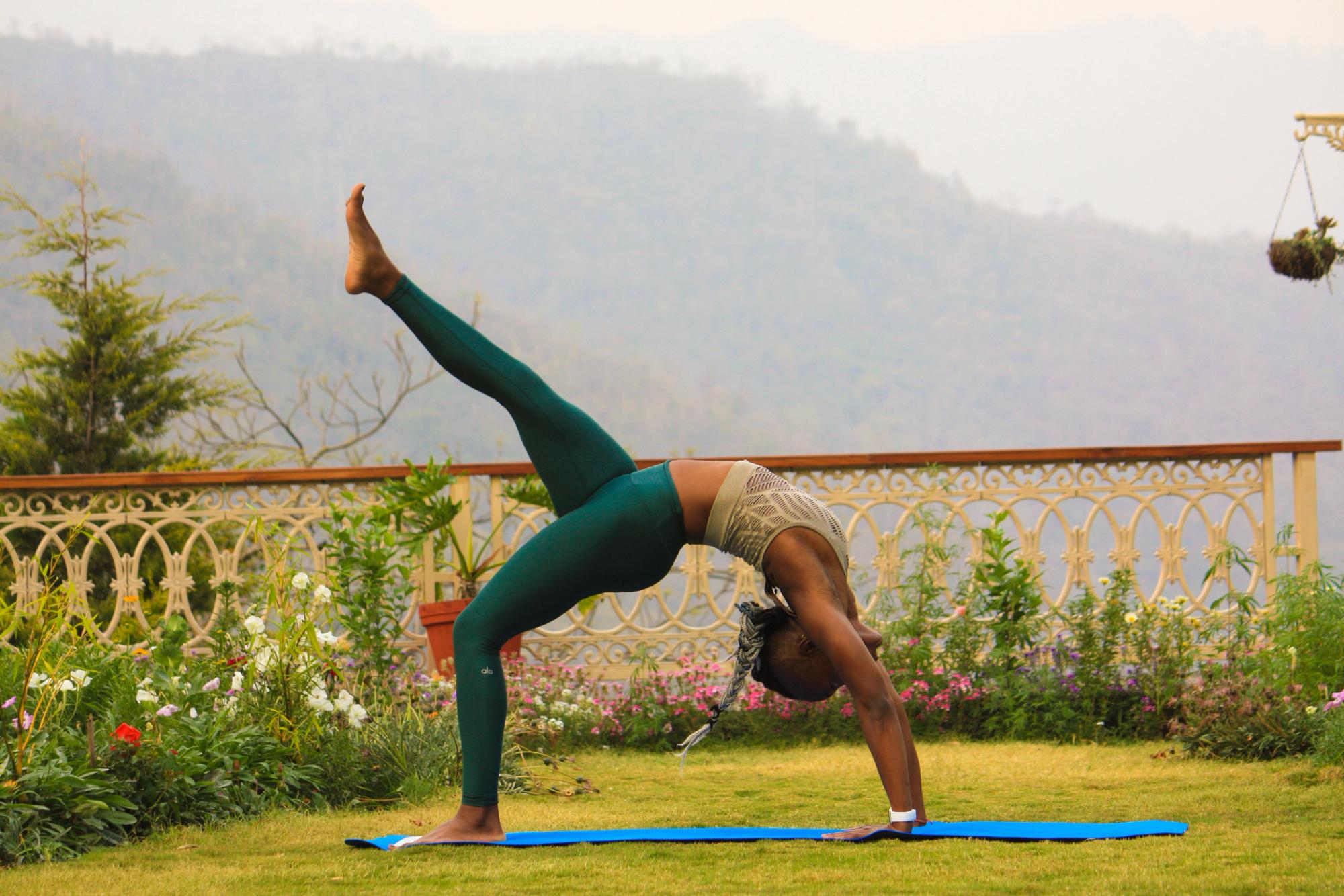
Yoga teaches how a person is in control of their body, mind, and breathing, which then helps build empowerment. When overcoming obstacles, an important part of recovery is discovering confidence, self-awareness, and resiliency. For instance, a person recovering from addiction learns to be confident in their ability to say no to things they no longer want part of their life, and can gain confidence in new habits through the daily practice of yoga.
Yoga instructors in rehab facilities are there to teach yoga to all levels. It takes time and patience with oneself to become good at things that are unfamiliar. Yet, confidence arises each time a yoga session is complete because the learner is starting to master something that might have seemed very difficult or impossible.
2. Mastering Breath Control to Reduce Stress and Anxiety

Yoga focuses significantly on controlled breathing and for good reason. Deep breathing helps alleviate worries that you may be experiencing, and you can instead begin to focus on being grateful and whole with each breath you are breathing in and out. Practicing more awareness of your breath in yoga also helps shift mindsets to live in the present time. With the stress in the world, sometimes it can be hard to live in the moment, and yoga can help fight the tendency to always live in the past or in the future. Yoga poses focus on using motions paired with intentional breathing that center the mind and physical body. So, practicing yoga can help calm the mind and increase self-awareness.
3. Finding Community and Support Through Group Classes
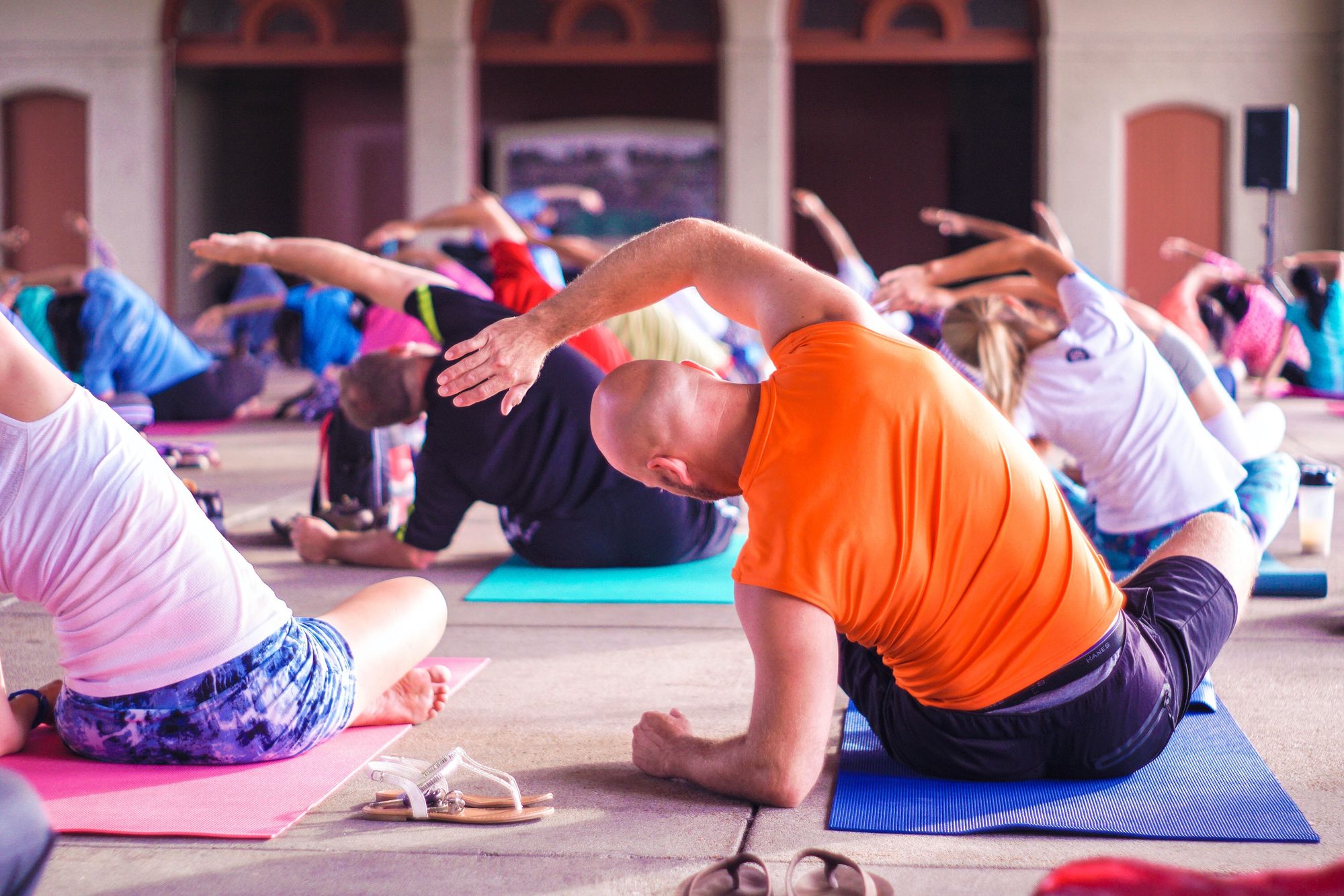
Although yoga can be done alone, yoga classes provide another opportunity to build community. Yoga classes in the rehab center are good places to start building connections, and after leaving treatment, yoga classes are typically accessible if one wants to continue the practice. Participating in classes or joining a yoga studio can help you have space to decompress, focus on wholeness, well-being and build friendships with others who share common interests. Research shows that community and support are beneficial to recovery; it’s important to surround oneself with people who encourage and pursue healthy mindsets.
4. Improving Physical Health and Lowering Blood Pressure

Yoga helps decrease stress while promoting physical health. Stress impacts the nervous system and can cause structural changes in the brain, including cerebral atrophy.5 While stress on the mind and body from addictions can cause high blood pressure and other health related issues, yoga helps lower blood pressure and reduce stress.6 Yoga is a great practice to turn to when you are feeling stressed.
5. Shifting From Negative to Positive Thinking
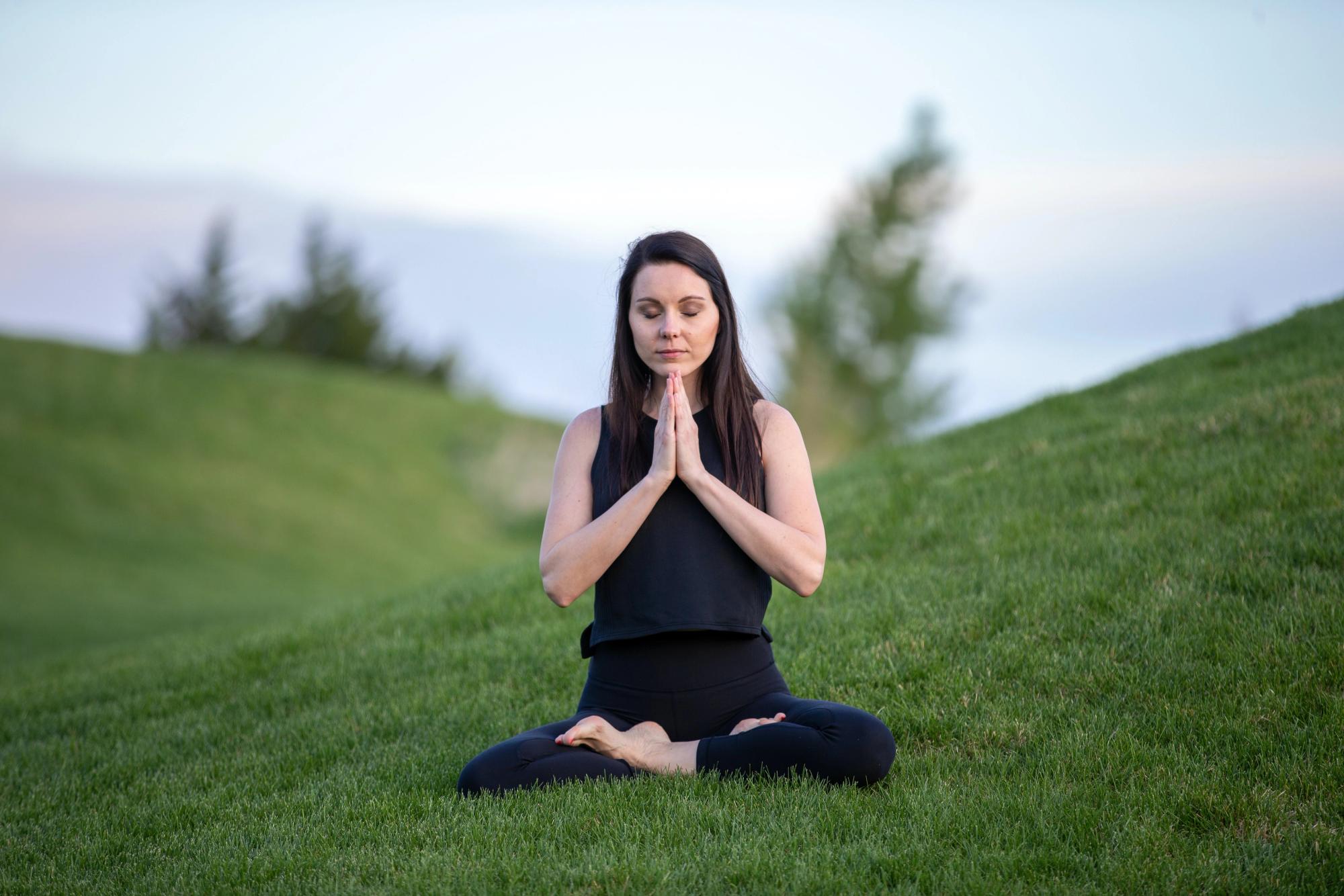
Yoga challenges negative thinking with positive thinking. The mindset shift is important for people who may be healing. Often in addictions, negative views of oneself and the world can hinder the person to see the beauty in themselves and all around them. Yoga centers and grounds you to reflect and see the good in oneself. You’ll start to learn how to love yourself and think positive thoughts.
These 5 reasons are only a glimpse of why yoga can be effective in addiction treatment. Once learned, yoga can be done at any time. So, for instance, if it is a busy day and you only have 15 minutes to spare before the next meeting at work, yoga is a great way to relieve stress and pursue wholeness. Doesn’t yoga sound incredible?
Explore treatment centers that offer yoga to compare pricing, treatment approaches, insurance accepted, and more.
FAQs
-
O'Brien, David; Smith, Cooper; Arnold, Cameron; Martin, Maya; Kiniry, David; and Zeman, Kayleigh (2023) "The Histories Volume 17, Fall 2023," The Histories: Vol. 17: Iss. 1, Article 3. https://files01.core.ac.uk/download/pdf/588303873.pdf#page=36
-
Csala B, Springinsfeld CM, Köteles F. The Relationship Between Yoga and Spirituality: A Systematic Review of Empirical Research. Front Psychol. 2021 Aug 2;12:695939. doi: 10.3389/fpsyg.2021.695939. PMID: 34408712; PMCID: PMC8365182. https://pmc.ncbi.nlm.nih.gov/articles/PMC8365182/
-
Anil, M. A., & Azhar, M. S. S. (2024). A meta-analysis of how different styles of yoga improve flexibility, strength, and cardiovascular health. Journal of Advanced Zoology, 45(2). https://doi.org/10.53555/jaz.v45i2.5268. https://jazindia.com/index.php/jaz/article/view/5268?articlesBySimilarityPage=98
-
Aakash, Sisodia, A., Kumar, A., & Jain, I. (2023). Patanjali’s Ashtanga Yoga: A bibliometric analysis of its impact on health and well-being. Journal for ReAttach Therapy and Developmental Diversities, 6(1), 1003–1013. https://jrtdd.com/index.php/journal/article/download/2550/1812
-
Yaribeygi H, Panahi Y, Sahraei H, Johnston TP, Sahebkar A. The impact of stress on body function: A review. EXCLI J. 2017 Jul 21;16:1057-1072. doi: 10.17179/excli2017-480. PMID: 28900385; PMCID: PMC5579396. https://www.ncbi.nlm.nih.gov/pmc/articles/PMC5579396/
-
Hagins, Marshall, States, Rebecca, Selfe, Terry, Innes, Kim, Effectiveness of Yoga for Hypertension: Systematic Review and Meta-Analysis, Evidence-Based Complementary and Alternative Medicine, 2013, 649836, 13 pages, 2013. https://doi.org/10.1155/2013/649836. https://onlinelibrary.wiley.com/action/showCitFormats?doi=10.1155%2F2013%2F649836


















Our Promise
How Is Recovery.com Different?
We believe everyone deserves access to accurate, unbiased information about mental health and recovery. That's why we have a comprehensive set of treatment providers and don't charge for inclusion. Any center that meets our criteria can list for free. We do not and have never accepted fees for referring someone to a particular center. Providers who advertise with us must be verified by our Research Team and we clearly mark their status as advertisers.
Our goal is to help you choose the best path for your recovery. That begins with information you can trust.