- Addiction
- Mental Health
- About Us
Find Treatment By
Rehabs by Location


Find Treatment By
Learn
About Us
Recovery.com combines independent research with expert guidance on addiction and mental health treatment. Our mission is to help everyone find the best path to recovery through the most comprehensive, helpful network of treatment providers worldwide.
Advisory Council
Our advisory council brings together leaders in behavioral health, technology, and business. Their diverse expertise ensures our resources and product are innovative, evidence-based, and effective. They guide our mission as accomplished individuals dedicated to improving the landscape of addiction recovery and mental wellness.
The Gray Rock Method: 6 Ways to Protect Your Mental Health From Narcissistic Abuse

Hannah is a holistic wellness writer who explores post-traumatic growth and the mind-body connection through her work for various health and wellness platforms. She is also a licensed massage therapist who has contributed meditations, essays, and blog posts to apps and websites focused on mental health and fitness.

Rajnandini is a psychologist (M.Sc. Psychology) and writer dedicated to making mental health knowledge accessible.
Hannah is a holistic wellness writer who explores post-traumatic growth and the mind-body connection through her work for various health and wellness platforms. She is also a licensed massage therapist who has contributed meditations, essays, and blog posts to apps and websites focused on mental health and fitness.
Rajnandini is a psychologist (M.Sc. Psychology) and writer dedicated to making mental health knowledge accessible.
Table of Contents
If you're dealing with a narcissistic or emotionally abusive person in your life, you already know how exhausting it can be. The constant tension, walking on eggshells, and the way certain interactions can leave you questioning your own reality takes a real toll. And it's not just stress. Research shows that prolonged exposure to narcissistic abuse can lead to lasting psychological harm, including anxiety, depression, and complex PTSD (CPTSD).1 What you're experiencing is real, and it deserves real support.
Professional treatment can help you heal from narcissistic abuse (and we'll get to that). But there are also practical tools that can help you protect yourself right now, especially when cutting contact completely isn't possible. One of the most effective is the gray rock method: A self-protective strategy that can help you disengage emotionally from toxic behavior, reduce manipulative behavior, and reclaim a sense of control while you figure out your next steps.
This guide walks you through what the gray rock method is, how to use it safely, and when it's time to seek the professional support you deserve.
Understanding Toxic Relationships
Toxic patterns are common in relationships with narcissists and other cluster B personalities.2 Narcissists have an inflated sense of self-importance, lack empathy, and thrive on manipulating others. All of these traits make for predictably poor interactions.
“If you have ongoing exposure to controlling people, it’s a virtual certainty that you’re going to experience blurry boundaries,” says clinical therapist and narcissism expert Dr. Les Carter.3
But not all difficult interactions warrant the gray rock method. There’s a difference between the all-consuming conflicts that chronically occur in abusive relationships and the smaller problems that naturally occur in “normal” relationships.
Explore Trauma Treatment Centers
What Narcissistic Abuse Actually Means
Gray rock is often used for relationships involving narcissistic tendencies. While the term is often used casually, narcissistic personality disorder (NPD) is defined as “a personality disorder with the following characteristics:
- A long-standing pattern of grandiose self-importance and an exaggerated sense of talent and achievements
- Fantasies of unlimited sex, power, brilliance, or beauty
- An exhibitionistic need for attention and admiration
- Either cool indifference or feelings of rage, humiliation, or emptiness as a response to criticism, indifference, or defeat
- Various interpersonal disturbances, such as feeling entitled to special favors, taking advantage of others, and inability to empathize with the feelings of others”4
Signs of a Toxic Relationship
Red flags that signal a toxic relationship are easy to overlook, especially if you haven’t learned to identify them, or if your childhood experiences tell you they’re normal. So how can you tell the difference between normal relationship conflict and abusive behavior? Start by asking yourself if you’re experiencing the following:
- A one-sided power dynamic: You feel belittled, manipulated, or criticized.
- Walking on eggshells: You constantly dread their next episode and perform in ways you think will gain their approval.
- Emotional manipulation: They use shame and guilt trips to control your behavior.
- Energy drain: Interactions leave you feeling depleted and emotionally exhausted.
- Disrespect: They chronically disrespect your humanity and personal boundaries.
- Lack of empathy: They show little to no concern for your feelings or emotional well-being.
- Isolating behavior: They try to control who you see, effectively limiting your social circle.
- Rage: They have unpredictable outbursts or anger issues.
- Gaslighting: They deny or twist reality to make you question your perception.
- Pathological lying: They lie compulsively and without reason.
Gray rock doesn’t apply to healthy relationships, which benefit from working through problems using clear communication. It’s a coping strategy for people who need to minimize the damage that toxic relationships cause.
Why People Choose to Use Gray Rock
Narcissists lack empathy.5 They struggle to see things from your perspective and have little regard for your emotional well-being. As such, they use manipulative tactics like shaming, gaslighting, or outright lies to get what they want. Emotional reactions, whether positive or negative, give narcissists what's known as narcissistic supply: The attention and validation that fuels their behavior. As a result, you're left feeling drained, unheard, and questioning your sanity.
Because of this, many people choose to go no-contact with narcissists, especially when leaving an abusive partner.6 But no-contact isn’t always possible—and isn’t always the best solution. Sometimes you need to maintain relationships with emotionally immature people (for example, to co-parent a child with an ex). Other times, stopping contact altogether involves more emotional labor than simply keeping it to a minimum.
Implementing the Gray Rock Method
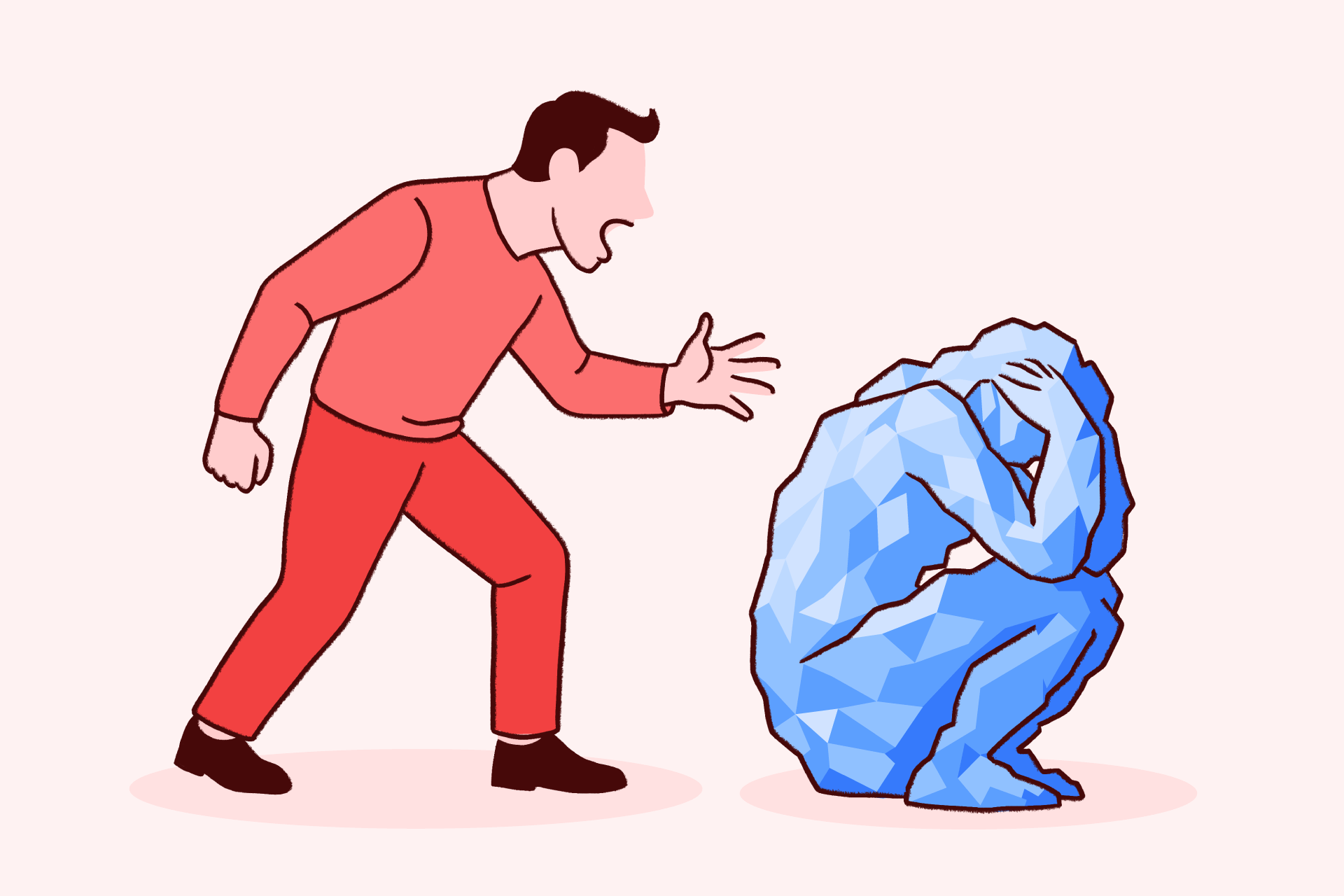
Gray rocking is a way of protecting your energy by giving people who intend to manipulate you nothing to work with. This means not sharing inner thoughts and feelings. “Narcissists are data collectors,” says Dr. Carter. “The more you share your thoughts, they’re just collecting data to use against you later on.”3
The goal of gray rock is to put yourself in the most neutral position possible. By becoming emotionally unresponsive, you decrease narcissists’ interest in you as a target. Here are some ways you can use it:
- Minimize emotional reactions. Avoid expressing strong emotions like anger, frustration, or sadness. This might feel unnatural at first, but remember, you're aiming to be a dull rock, not a juicy target.
- Limit conversation. Respond to questions with short, bland, factual answers. Avoid elaborate explanations or justifications. Opt for one-word answers like "okay," "sure," or "fine" when possible.
- Maintain a neutral demeanor. Keep your body language neutral. Avoid making eye contact, crossing your arms, or fidgeting excessively. A calm and unbothered exterior further discourages engagement.
- Keep it brief. Keep verbal exchanges as short as possible.
- Don’t share your opinions or expand on ideas. Reveal the least amount of information possible about yourself.
- Don’t make attempts to correct their thinking. If they start antagonizing you, don’t argue back. End the interaction.
Gray rock also extends to digital communication.
- Keep texts and emails short and to the point.
- Don’t answer calls or messages until you feel emotionally ready.
- Mute, block, or use do-not-disturb mode as necessary.
Examples: Using Gray Rock in Conversation
When you know you’re stepping into a challenging interaction, it helps to have a plan. Here are some ideas:
Replies
Give bland, non-committal responses without expanding further on ideas. You can also use one-word replies like “okay,” “sure,” and “interesting,” in a neutral tone.
Neutral Topics
Likewise, it can be useful to have some topics in your back pocket in case you need to steer the conversation away from sensitive subjects. These might include:
- The weather: “I heard it’s supposed to rain tomorrow.”
- Non-controversial current events: "Did you hear about the [positive news story]?"
- Your surroundings: "This coffee shop has a nice atmosphere."
- Food: "Have you tried that new Italian place downtown?"
Redirecting the Conversation
You can also (cautiously) steer the conversation away from things you’d rather not talk about using phrases like these:
- "I haven't thought much about that lately." (followed by a safe topic)
- "That's interesting, but I actually need to get going." (if appropriate)
Keeping the Focus on Them
One Redditor, nospaceforyou, says to avoid disclosing too much personal information to a manipulative person, “keep him talking about himself,” using questions like:7
- What have you been up to?
- Are you still doing [insert hobby]?
- Have you seen [insert movie]? I'm trying to decide whether or not to go. What do you think?
- Have you had lunch/dinner yet?
- How is [insert one of their friends] doing these days? Do you still talk?
- Do you have plans to go anywhere this summer?
The key is to keep responses brief, factual, and non-judgmental. Avoid getting drawn into emotional discussions or sharing personal details that could spark further conversation. Remember, your safety comes first. If the situation escalates or feels unsafe, remove yourself from the interaction.
With all of these techniques, proceed with caution. Your relationship dynamic is unique, and you know best what will escalate or deescalate a situation.
Is Gray Rocking Narcissistic Behavior?
Stonewalling (giving you the silent treatment, ghosting, or shutting down) is a common narcissistic tactic.8 So what’s the difference between this and gray rock? The answer is: the motive.
“There’s a difference between selfishness and self-preservation,” says Dr. Carter. “Some people just cannot engage well. Gray rock is a way of practicing self-care and self-respect, and is a reasonable way to engage with someone who does not participate well.”3
Stonewalling is a toxic person’s way of punishing you for not going along with their agenda. Gray rocking, on the other hand, is not used for manipulation.
Creating a Safety Plan
The gray rock method works best in situations where you have some degree of safety and stability. But if you're experiencing physical violence, escalating threats, or abuse that feels dangerous, gray rocking is not enough (and it’s not designed to be). Your safety needs to come first.
The National Domestic Violence Hotline (1-800-799-7233) offers free, confidential support 24/7. Trained advocates can help you think through your options, create a personalized safety plan, and connect you with local resources. You can also chat online at thehotline.org if calling doesn't feel safe.
The Crisis Text Line is available any time. Text HOME to 741741 to connect with a trained crisis counselor.
For a fuller list of resources available to survivors of domestic violence and abuse, including guidance on safety planning, see our guide to domestic violence resources and support.
Challenges and Considerations
Emotional detachment can feel awkward, especially if you're used to expressing yourself openly. Suppressing your natural reactions might make you feel like you’re being fake. One Redditor, indulgent_taurus, says gray rock itself can be emotionally tiring:9
“Due to my fawn response, I've never felt comfortable saying ‘no’ or setting boundaries around certain topics…I'm grateful for the grey rock technique. BUT, it's also exhausting. It's hard for me to give those bland, boring answers without sounding defensive or angry…my hypervigilance is on overdrive when I'm in her presence.”
“I had every right to step away from people who had hurt me deeply.”
The decision to minimize contact with someone you were close to is never easy—especially if that person is a family member. Sara D, a child abuse survivor, describes her experience:
“I know other child abuse survivors and I know of no one, myself included, who made the decision to go no or low contact or grey rock lightly—no one. My very personal decisions to limit contact with my abuser and my enabler and, at another point, to have no contact whatsoever with the both of them certainly weighed heavily on me. Those decisions were some of the most painful and difficult yet also most impactful of my life!... They came with costs—to everyone involved. But those decisions felt necessary, and right; they were self-preserving decisions. And I had every right to step away from people who had hurt me deeply, who had betrayed my trust early and often and shown no remorse and taken no accountability.”
Gray rock doesn’t solve all your problems—the idea is that it costs you less than engaging in conflict.
Risks of Using Gray Rock
Gray rock is growing in popularity, but as of yet, not much research has been done on this technique. It also carries some potential risks:
- Escalation: Narcissists crave attention, and if they're not getting the reaction they seek through their usual tactics, they might respond by escalating their behavior.
- Feeling emotionally drained: While the goal is to be emotionally neutral, constantly suppressing your true feelings can be draining. It's important to have healthy outlets for your emotions outside of this dynamic.
- Inadvertently enabling: In some cases, a narcissist may misinterpret your lack of emotional response as permission to continue their bad behavior. It's important to maintain clear boundaries, even if you're not engaging emotionally.
Gray rock means accepting that some relationships will never be healthy or fair, and choosing to adjust your own behavior rather than waiting for theirs to change.
When to Seek Professional Help
Gray rocking can help you manage difficult interactions, but it’s not designed to heal the damage that narcissistic abuse leaves behind. If any of the following resonates, it may be time to reach out:
- You feel anxious, on edge, or emotionally exhausted most of the time
- You struggle to trust your own perceptions or judgment
- You're out of the relationship but still don't feel free from it
- You've noticed symptoms of depression, emotional numbness, or disconnection from yourself
These are recognized signs of trauma, and they respond well to professional care.10
What Treatment for Narcissistic Abuse Recovery Looks Like
If you're experiencing symptoms of anxiety, depression, or CPTSD related to narcissistic abuse, a mental health professional can help you process what you've been through and begin rebuilding. Treatment typically involves one or more of the following evidence-based approaches:
- Cognitive behavioral therapy (CBT) helps you identify and challenge the distorted thought patterns narcissistic abuse instills, like believing you're not good enough or that your perceptions can't be trusted.
- Trauma-informed therapy treats narcissistic abuse as the psychological trauma it is, approaching your healing at your own pace and with your safety at the center.
- EMDR (eye movement desensitization and reprocessing) is widely used for PTSD and CPTSD, helping reduce the emotional intensity of painful memories so they no longer feel so present or overwhelming.
- Dialectical behavior therapy (DBT) builds skills in emotional regulation, distress tolerance, and interpersonal effectiveness—all areas that narcissistic abuse tends to erode.11
- Support groups connect you with others who have experienced narcissistic abuse firsthand, offering validation, shared perspective, and a sense of community that can be deeply grounding in recovery.
What to Look for in a Therapist or Program
Look for clinicians or programs that are trauma-informed, experienced with C-PTSD or complex trauma, and take a survivor-centered approach. For many people, outpatient therapy is a good starting point. If your symptoms are significantly affecting daily functioning or you need more intensive support, options like intensive outpatient (IOP) or residential trauma treatment may be worth exploring.
Many treatment options are available both online and in-person.
You Deserve More Than Survival
Gray rock can buy you short-term breathing room, but it’s not a long-term solution to the damage narcissistic abuse causes.
You've already taken one of the hardest steps by educating yourself and looking for ways to protect your well-being. The next step is support that helps you genuinely heal. Explore trauma-informed mental health treatment programs to find care that truly understands narcissistic abuse recovery.
FAQs
-
Singh, V. (2024). The silent scars of narcissistic abuse: Quantitative insights and emerging therapies for victim recovery [Preprint]. Authorea. https://doi.org/10.22541/au.173104585.51619293. https://www.authorea.com/doi/full/10.22541/au.173104585.51619293
-
Bender, D. S., Farber, B. A., & Geller, J. D. (2001). Cluster B personality traits and attachment. Journal of the American Academy of Psychoanalysis and Dynamic Psychiatry, 29(4), 551–563. https://doi.org/10.1521/jaap.29.4.551.21545. https://guilfordjournals.com/doi/abs/10.1521/jaap.29.4.551.21545?journalCode=jaap.1
-
Surviving Narcissism. (2021, May 8). When the gray rock method is reasonable with a narcissist [Video]. YouTube. https://www.youtube.com/watch?v=eWoNCWMTnys
-
narcissistic personality disorder. APA Dictionary of Psychology. American Psychological Association. https://dictionary.apa.org/narcissistic-personality-disorder
-
di Giacomo E, Andreini E, Lorusso O, Clerici M. The dark side of empathy in narcissistic personality disorder. Front Psychiatry. 2023 Mar 30;14:1074558. doi: 10.3389/fpsyt.2023.1074558. PMID: 37065887; PMCID: PMC10097942. https://www.ncbi.nlm.nih.gov/pmc/articles/PMC10097942/
-
Ask Dr. Ramani. (2023, Season 2, Episode 29). How to go “no contact” with a narcissist [Video]. YouTube. https://www.youtube.com/watch?v=x96bDB10b4Q
-
"please, please, please help me come up with a list of grey rock phrases for tomorrow." GreyRock911. r/raisedbynarcissists. Reddit. https://www.reddit.com/r/raisedbynarcissists/comments/613vhv/please_please_please_help_me_come_up_with_a_list/
-
DoctorRamani. (2020, April 26). What is “stonewalling”? (Glossary of Narcissistic Relationships) [Video]. YouTube. https://www.youtube.com/watch?v=IhIvZBUfpHo
-
"I love the Grey Rock method but it also exhausts me." indulgent_taurus. r/CPTSDFawn. Reddit. https://www.reddit.com/r/CPTSDFawn/comments/106cnrk/i_love_the_grey_rock_method_but_it_also_exhausts/
-
Center for Substance Abuse Treatment (US). Trauma-Informed Care in Behavioral Health Services. Rockville (MD): Substance Abuse and Mental Health Services Administration (US); 2014. (Treatment Improvement Protocol (TIP) Series, No. 57.) Chapter 3, Understanding the Impact of Trauma. https://www.ncbi.nlm.nih.gov/books/NBK207191/
-
Dixon-Gordon KL, Chapman AL, Turner BJ. A Preliminary Pilot Study Comparing Dialectical Behavior Therapy Emotion Regulation Skills with Interpersonal Effectiveness Skills and a Control Group Treatment. Journal of Experimental Psychopathology. 2016;6(4):369-388. doi:10.5127/jep.041714. https://journals.sagepub.com/doi/10.5127/jep.041714


















Our Promise
How Is Recovery.com Different?
We believe everyone deserves access to accurate, unbiased information about mental health and recovery. That's why we have a comprehensive set of treatment providers and don't charge for inclusion. Any center that meets our criteria can list for free. We do not and have never accepted fees for referring someone to a particular center. Providers who advertise with us must be verified by our Research Team and we clearly mark their status as advertisers.
Our goal is to help you choose the best path for your recovery. That begins with information you can trust.