- Addiction
- Mental Health
- About Us
Find Treatment By
Rehabs by Location


Find Treatment By
Learn
About Us
Recovery.com combines independent research with expert guidance on addiction and mental health treatment. Our mission is to help everyone find the best path to recovery through the most comprehensive, helpful network of treatment providers worldwide.
Advisory Council
Our advisory council brings together leaders in behavioral health, technology, and business. Their diverse expertise ensures our resources and product are innovative, evidence-based, and effective. They guide our mission as accomplished individuals dedicated to improving the landscape of addiction recovery and mental wellness.
How Long Does It Take to Break an Addiction? 5 Key Factors That Affect Your Timeline

Hannah is a holistic wellness writer who explores post-traumatic growth and the mind-body connection through her work for various health and wellness platforms. She is also a licensed massage therapist who has contributed meditations, essays, and blog posts to apps and websites focused on mental health and fitness.
Hannah is a holistic wellness writer who explores post-traumatic growth and the mind-body connection through her work for various health and wellness platforms. She is also a licensed massage therapist who has contributed meditations, essays, and blog posts to apps and websites focused on mental health and fitness.
When you first decide to seek help for substance use disorder, you might wonder how long the process will take. While each person’s recovery journey is unique, the research shows some clear patterns that can help you set realistic expectations as you start the process of recovery.
Understanding the Recovery Timeline
Let’s look at some common misunderstandings about recovery timelines to help set realistic expectations for your journey.
The 21-Day Myth
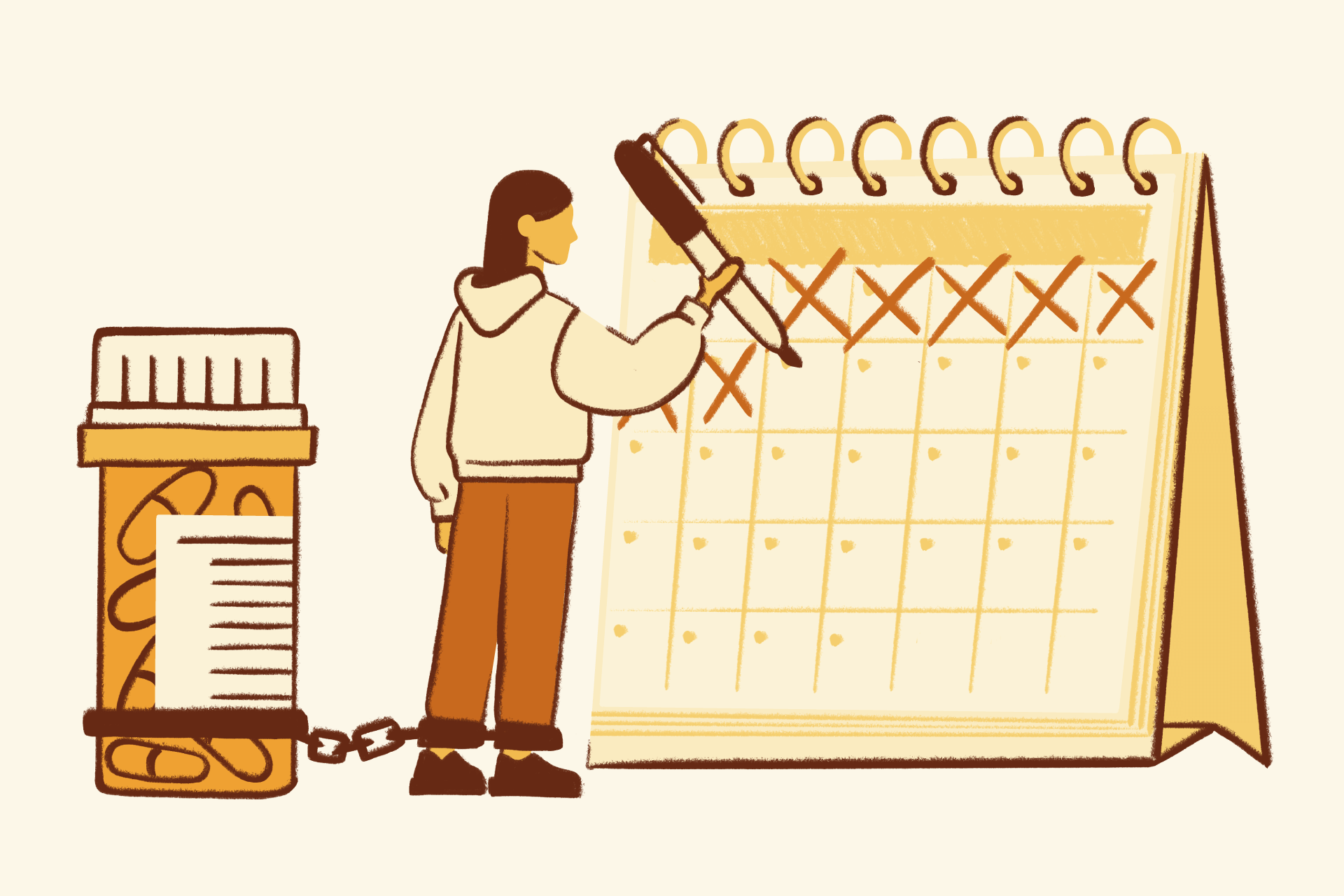
You may have heard that it takes just 21 days to break any habit, including addiction. This common belief sounds promising, but unfortunately, it’s not accurate. The idea of the 21-day timeline came from Dr. Maxwell Maltz’s 1960 book Psycho-Cybernetics. He observed that surgery patients needed about 21 days to adjust to their new appearance. Over time, people misunderstood this observation and started applying it to all kinds of behavioral changes, including breaking addiction.
But making this kind of life change takes time—and preparing yourself for a more realistic timeline can help set you up for success in recovery.
Why Breaking Addiction Takes Longer
Breaking free from addiction is a lot more complex than changing a simple habit.Drug and alcohol use create changes in your brain that affect everything from your emotions and decision-making skills to the coping mechanisms you use to deal with life. Unfortunately, these changes don’t reverse themselves in just a few short weeks.
Research shows that addiction follows many of the same patterns as other strong habits we develop.1 Just like learning any new behavior, recovery involves teaching your brain new ways to respond to stress and triggers. The good news is, this means we can use proven strategies for changing behavior to help break addiction.
Explore Drug Addiction Treatment Centers
Giving Your Brain Time to Heal
Recovery involves more than stopping active substance use. It’s about allowing your body and brain to recover from the effects of substance misuse, addressing the causes of your addiction at their core, and building new habits that support long-term recovery. During active addiction, your brain adapts in three important ways:2
- It begins to connect substances with pleasure
- It becomes less sensitive to natural rewards, such as food and social connection
- It has a harder time making and sticking to decisions about staying sober
The healing process takes time, patience, and, in many cases, professional support to achieve lasting change. While timelines vary from person to person, some experts believe there is a bare minimum for breaking addiction: 90 days of treatment.
What role does neuroplasticity play in long-term addiction recovery?

Why Treatment Often Takes 90 Days or More
While residential rehab programs typically last at least 28 days, research shows that most people need at least three months to achieve greater recovery outcomes.3
This longer timeline makes sense when you consider all the changes happening in your brain and body during recovery.
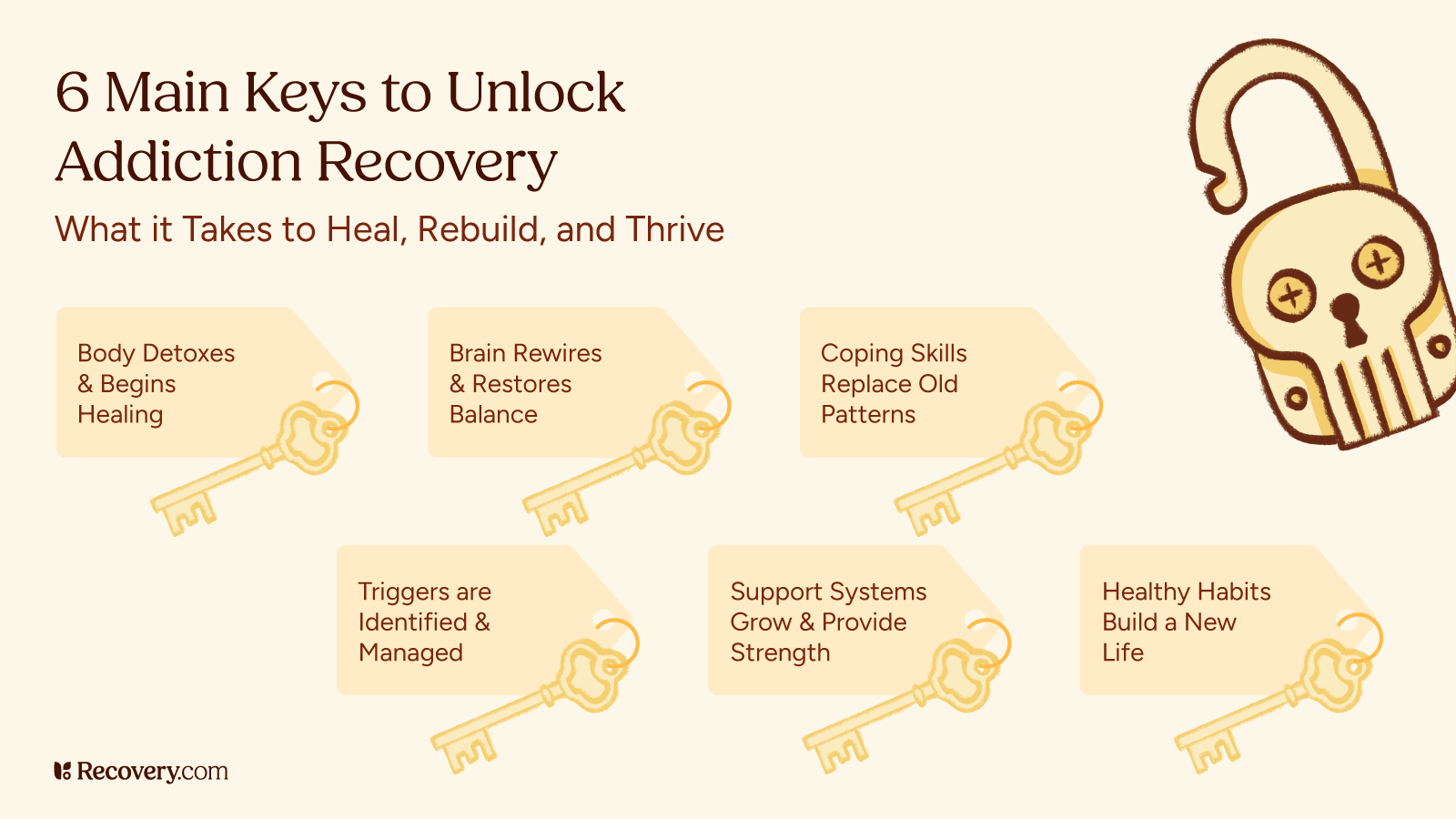
During these crucial first 90 days, several important changes can occur:
- Your body rids itself of substances and begins to heal
- Your brain starts rebuilding healthy neural pathways
- You learn to identify and work through triggers
- You learn and practice new coping skills
- You build stronger support systems
- You develop new, healthy habits to replace old patterns that led to addiction
Factors That Influence Your Recovery Time
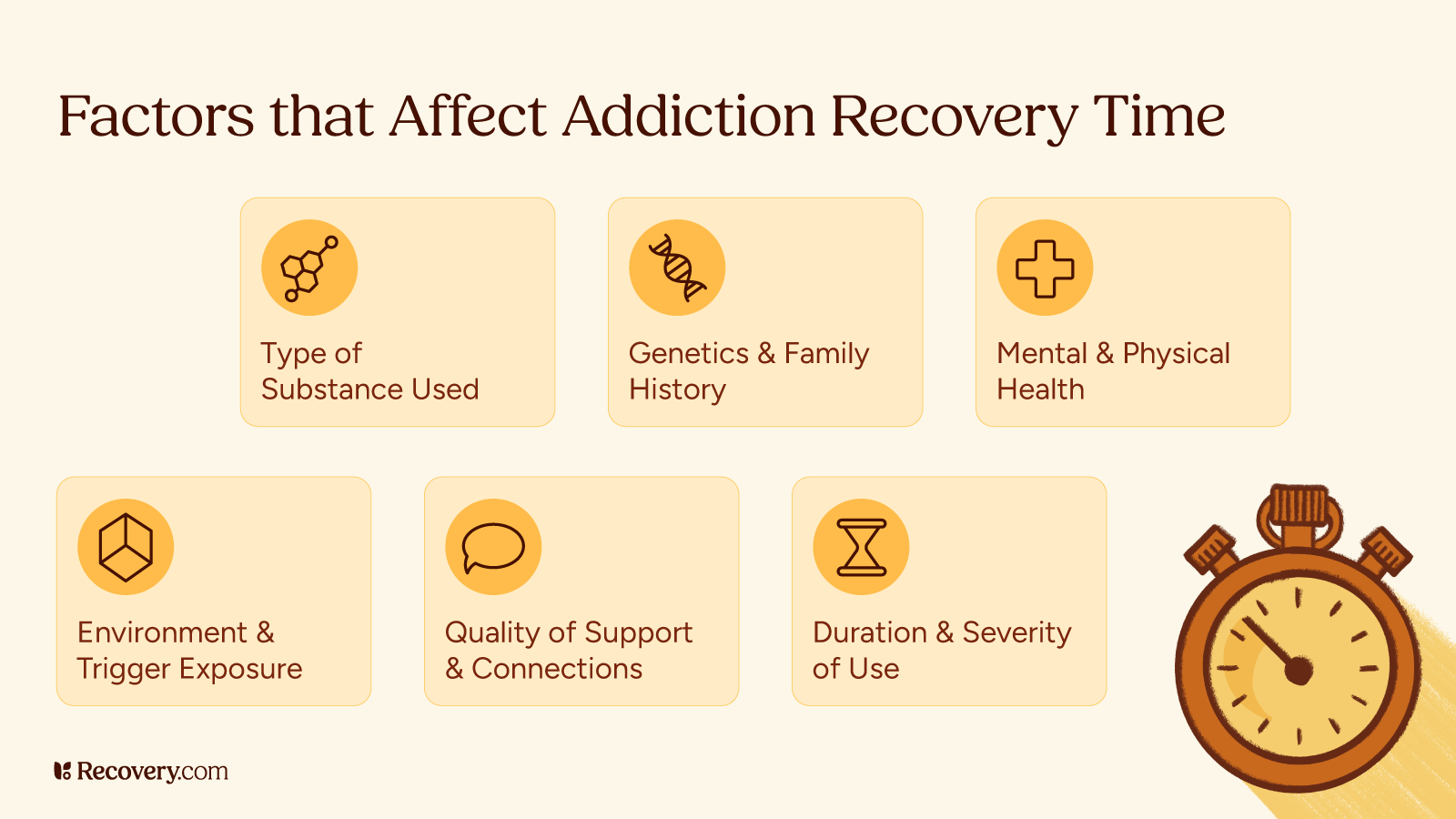
Addiction is defined as “a treatable, chronic medical disease involving complex interactions among brain circuits, genetics, the environment, and an individual’s life experiences.”4 As such, a number of factors can influence how long it takes to recover:
1. The Type of Substance You Used
The type of substance you used can play a role in how long you will need treatment for. For example, a person can problems with certain organ systems as a result of alcohol addiction, therefore requiring extended treatment to address. Or, if opioids were misused, the intense impact on brain chemistry might cause a person to require longer-termmedication-assisted treatment.
2. Your History of Substance Use
The severity of the addiction can significantly affect your timeline. If you’ve been using a substance for a very long time, or at very high doses, you may need a more intensive treatment approach. Your treatment team will consider several factors when creating your treatment plan, such as:
- How long you’ve been using substances.
- How much you typically use.
- Whether you use more than one substance at a time.
3. Physical and Mental Health
Your overall physical health plays an important role in your recovery process. Any existing health problems you have might affect how your body responds to treatment. Similarly, mental health conditions like anxiety or depression often require specialized treatment to address both addiction and mental health simultaneously.
Learn more about co-occurring disorders and how to find effective care in our article onco-occurring disorder treatment.
4. Quality of Support
A strong support network makes a significant difference in addiction recovery. This includes:
- Support from family members and loved ones
- Connections with others in recovery
- Professional help through addiction treatment programs
- Community resources and support groups
- Stable living environment
Building this support network is part of what you’ll work on in rehab as part of yourplan to prevent relapse once you return home. Having reliable support can help you stay motivated during challenging times and celebrate your successes along the way.
5. Personal Circumstances
A few individual factors also influence recovery:
- Age and how quickly your body heals
- Family history and genetic factors
- Current stress levels
- Previous attempts at recovery
- Work and family responsibilities
- Living situation and daily environment
In addiction treatment, your clinical team will consider these factors when creating a treatment plan that’s tailored to your specific needs.
How do cultural or community factors affect recovery timelines?

The Science of Breaking Addiction
Understanding the science behind addiction can help explain why recovery takes time—and why professional support is so valuable.
Understanding Brain Changes
Addiction changes your brain’s natural reward system and decision-making processes.5 When you regularly use substances like drugs and alcohol, your brain adapts by reducing its own production of dopamine, also known as "feel-good chemicals". This is why breaking addiction takes time and professional care—your brain needs to rebuild these natural systems.
How Cravings Affect Recovery
When you use substances regularly, your brain learns to expect the presence of them.2 When you stop using, you may experience powerful cravings that can feel overwhelming at first. This helps explain why early recovery can feel so challenging—your brain needs time to unlearn these strong associations. In rehab, you’ll learn how to handle these feelings as you keep moving toward your recovery goals.
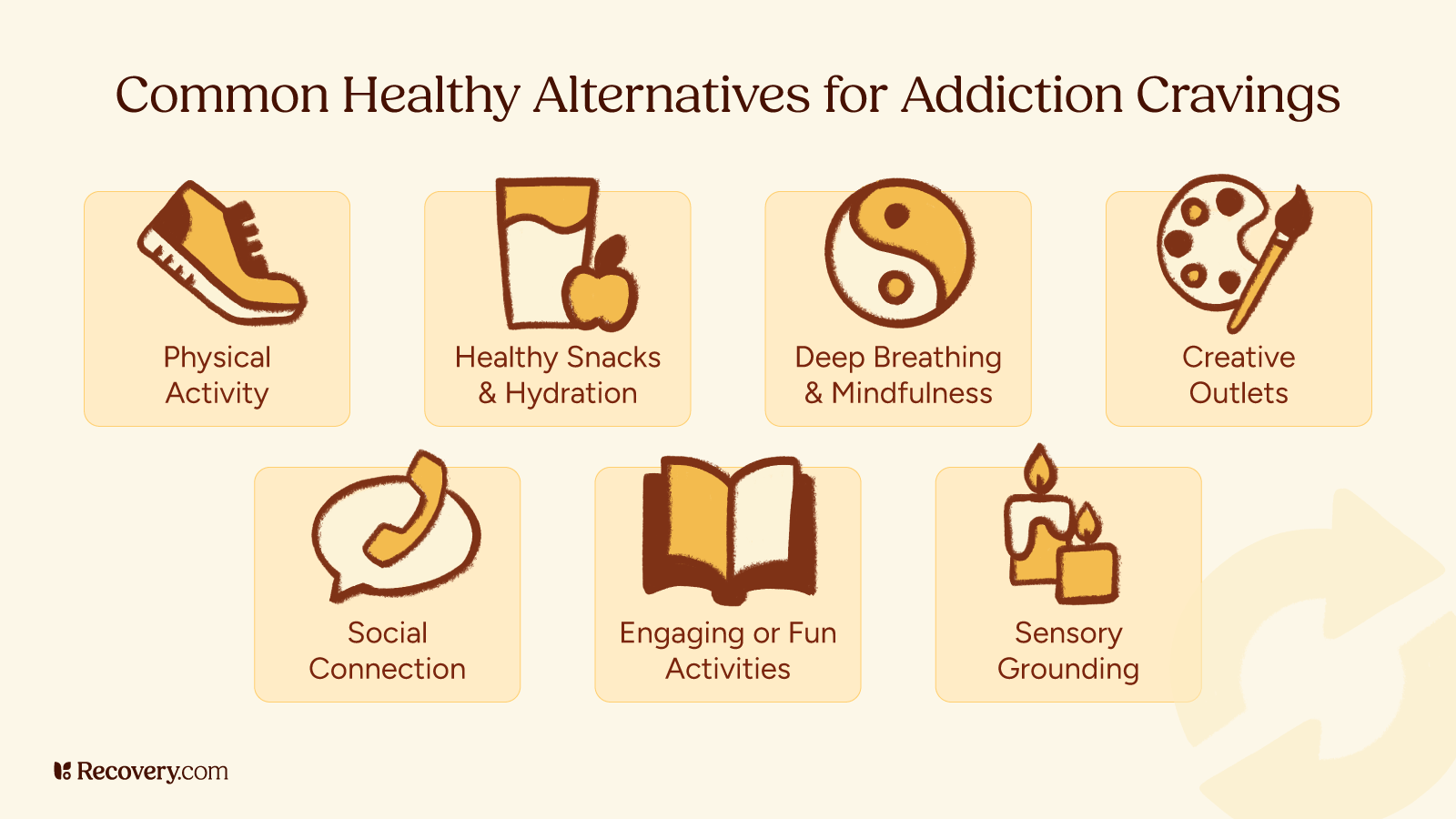
Rehabs teach strategies like these to help you manage cravings:
- Recognizing early warning signs
- Using distraction techniques
- Urge surfing and other mindfulness tools
- Applying stress management skills
- Reaching out for support when you need it
Understanding Treatment Options
The good news is that addiction is a treatable disorder that responds well to proper care.6 Addiction treatment options exist along a spectrum, and finding the right type of care is essential to your recovery.
Let’s look at how different levels of care meet different needs.
Detox
Not everyone needs detox, but if do, it is extremely important todetox under medical supervision. This is especially true if you use alcohol or benzodiazepines. Detoxing in a substance-free, recovery-focused environment means you’re less likely to relapse when withdrawal symptoms get challenging. It also ensures your detoxification is as safe and as comfortable as possible.
Inpatient Treatment
Inpatient treatment offers the highest level of support during early recovery. You’ll receive round-the-clock care in a treatment facility, where addiction professionals guide you through a personalized treatment plan. The structured environment removes you from daily triggers and stress, allowing you to focus completely on your recovery. During your stay, you’ll participate in intensive behavioral therapy and have access to comprehensive support services, including individual counseling, group therapy, and holistic healing approaches.
Outpatient Treatment
Outpatient addiction treatment lets you continue working or caring for your family while receiving a high level of professional support. You’ll attend therapy and counseling sessions several times per week, participate in support groups, and learn to practice recovery skills in real-world situations. This option helps you build a local support network while maintaining your daily responsibilities.
Relapse Prevention and Continuing Care
Recovery is a lifestyle: It continues long after initial treatment ends. Aftercare can help you maintain the progress you started in rehab through regular counseling, check-ins with your healthcare providers, and regularly attending support groups. Many people find that this level of support helps them navigate the challenges of recovery and stay motivated toward their goals.
Keep in mind that when it comes to recovery, progress is a process. The National Institute on Drug Abuse (NIDA) explains:
True Healing Takes Time
Recovery is about more than just stopping substance use—it’s about creating sustainable, long-term lifestyle change.
These changes don’t happen overnight. Like learning any new skill, building a better life takes consistent practice over time. Be patient with yourself while you take small steps forward. As you develop new routines, find activities you enjoy, and learn better ways to handle stress, your journey will start to feel more and more rewarding.
Recovery life takes time. And the sooner you start your recovery journey, the sooner your healing can begin.
What leads to a long-term and sustained recovery?

Get Help For Yourself or A Loved One Today
Recovery may seem daunting, but effective help is available. Explore residential drug rehabs or specialized alcohol addiction treatment programs to find the right environment for healing. Use our free tool to search for addiction treatment by insurance, location, and amenities now.
FAQs
-
Kopetz, C.E., Kruglanski, A.W., Lejuez, C.W., Wiers, R.W. (2015, June 9). Motivation and Self-Regulation in Addiction: A Call for Convergence . https://pmc.ncbi.nlm.nih.gov/articles/PMC4461059/
-
U.S. Department of Health & Human Services, Office of the Surgeon General. (2016, November). Facing Addiction in America: The Surgeon General's Report on Alcohol, Drugs, and Health. https://www.hhs.gov/sites/default/files/facing-addiction-in-america-surgeon-generals-report.pdf
-
Council, C.L., Dowd, W.N., Mark, T.L. (2020, July). Tracking the Quality of Addiction Treatment Over Time and Across States: Using the Federal Government's "Signs" of Higher Quality. https://www.ncbi.nlm.nih.gov/books/NBK559647/
-
American Society of Addiction Medicine. (2019, September 15). Definition of Addiction. https://www.asam.org/quality-care/definition-of-addiction/
-
National Institute on Drug Abuse. (2020, July 6). Drugs, Brains, and Behavior: The Science of Addiction. Drugs and the Brain. https://nida.nih.gov/publications/drugs-brains-behavior-science-addiction/drugs-brain
-
National Institute on Drug Abuse. (2018, January). Principles of Drug Addiction Treatment: A Research-Based Guide (Third Edition). https://nida.nih.gov/sites/default/files/podat-3rdEd-508.pdf


















Our Promise
How Is Recovery.com Different?
We believe everyone deserves access to accurate, unbiased information about mental health and recovery. That's why we have a comprehensive set of treatment providers and don't charge for inclusion. Any center that meets our criteria can list for free. We do not and have never accepted fees for referring someone to a particular center. Providers who advertise with us must be verified by our Research Team and we clearly mark their status as advertisers.
Our goal is to help you choose the best path for your recovery. That begins with information you can trust.