- Addiction
- Mental Health
- About Us
Find Treatment By
Rehabs by Location


Find Treatment By
Learn
About Us
Recovery.com combines independent research with expert guidance on addiction and mental health treatment. Our mission is to help everyone find the best path to recovery through the most comprehensive, helpful network of treatment providers worldwide.
Advisory Council
Our advisory council brings together leaders in behavioral health, technology, and business. Their diverse expertise ensures our resources and product are innovative, evidence-based, and effective. They guide our mission as accomplished individuals dedicated to improving the landscape of addiction recovery and mental wellness.
Inpatient vs. Outpatient Care: How to Choose the Right Path for Treatment

Caroline Beidler, MSW is an author, speaker, and the Managing Editor of Recovery.com. She writes about topics related to addiction, mental health, and trauma recovery, informed by her personal experience and professional expertise.

Dr. Mala, is the Chief Clinical Officer at Recovery.com, where she develops impartial and informative resources for people seeking addiction and mental health treatment.

Caroline Beidler, MSW is an author, speaker, and the Managing Editor of Recovery.com. She writes about topics related to addiction, mental health, and trauma recovery, informed by her personal experience and professional expertise.
Dr. Mala, is the Chief Clinical Officer at Recovery.com, where she develops impartial and informative resources for people seeking addiction and mental health treatment.
Navigating the healthcare system can be overwhelming, especially when determining what type of care is best for you or a loved one. One of the most common distinctions you’ll encounter is between inpatient and outpatient care. Understanding the differences, benefits, and limitations of each can help you make an informed decision when seeking medical treatment or mental health support.
What’s the Main Difference Between Inpatient and Outpatient Care?
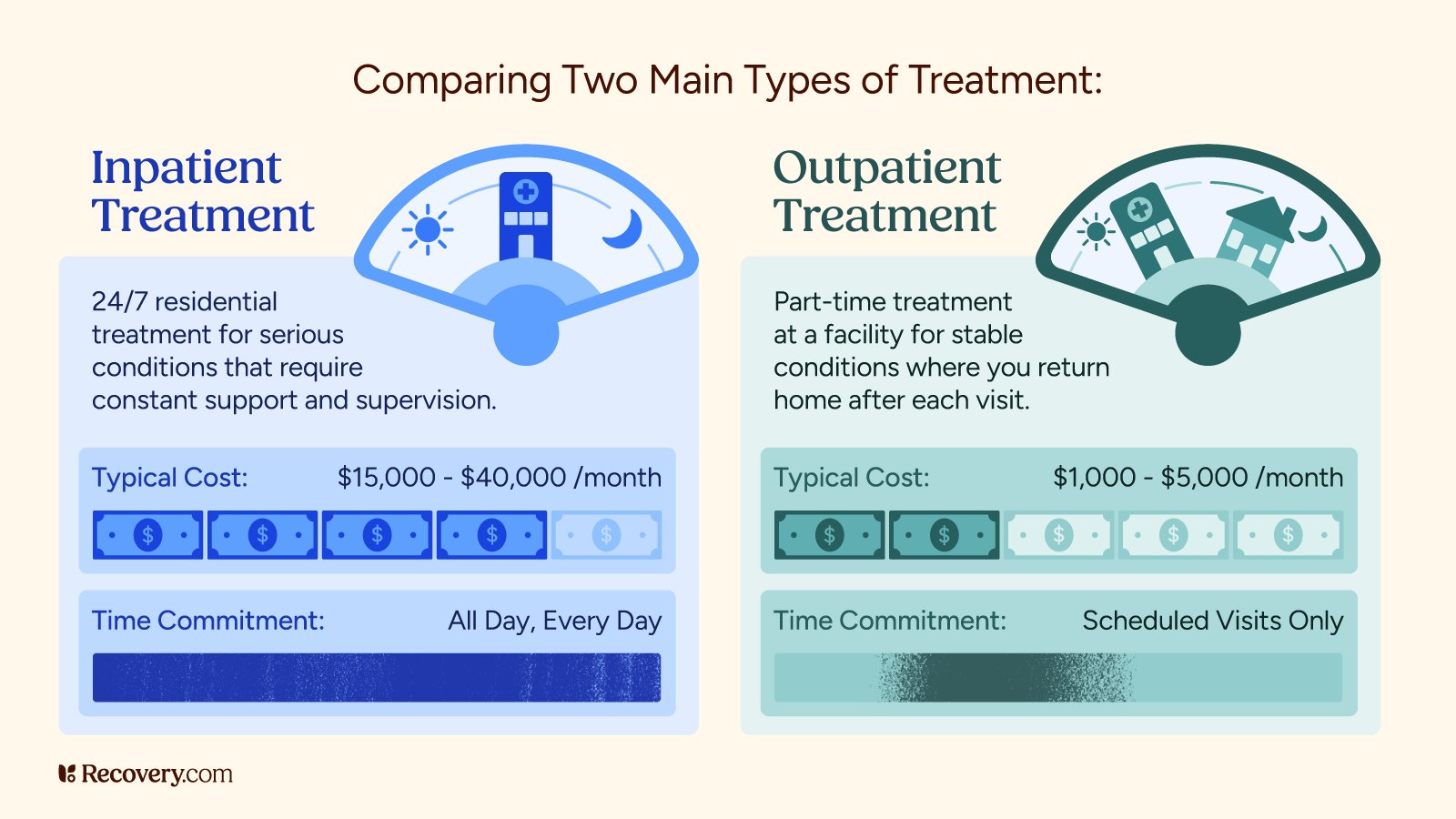
The main difference between inpatient vs. outpatient care lies in the need for an overnight stay.1 In inpatient treatment, patients are admitted to a hospital facility and remain under continuous medical supervision. This is typically required when a person needs more intensive medical care or mental health treatment.
In contrast, outpatient care involves treatment that does not require an overnight hospital stay. Patients visit a doctor’s office, clinic, or outpatient facility for procedures, therapy sessions, or evaluations and return home the same day.
Individuals and families can choose the best type of care for their needs and preferences.2 NAMI shares that: “Mental health treatment can be thought of as a continuum, with patients moving up or down in levels of care as needed.”3
Explore Drug Addiction Treatment Centers
What Is Inpatient Care?
Inpatient care refers to any treatment or medical procedure that requires a person to be admitted to a hospital or care facility.4 This type of care is often reserved for serious or complex health conditions that need close monitoring by medical professionals. Patients undergoing major surgery, treatment for a heart attack, or severe mental health disorders typically receive inpatient care. During a hospital stay, the patient has access to round-the-clock medical staff, including nurses, doctors, and specialists, ensuring a high level of care.
Inpatient care is often necessary when a person requires stabilization, intensive care, or specialized interventions that cannot be safely provided on an outpatient basis. Facilities offering inpatient services include hospitals, psychiatric centers, and substance abuse treatment centers.
What Are Some Examples of Inpatient Care?
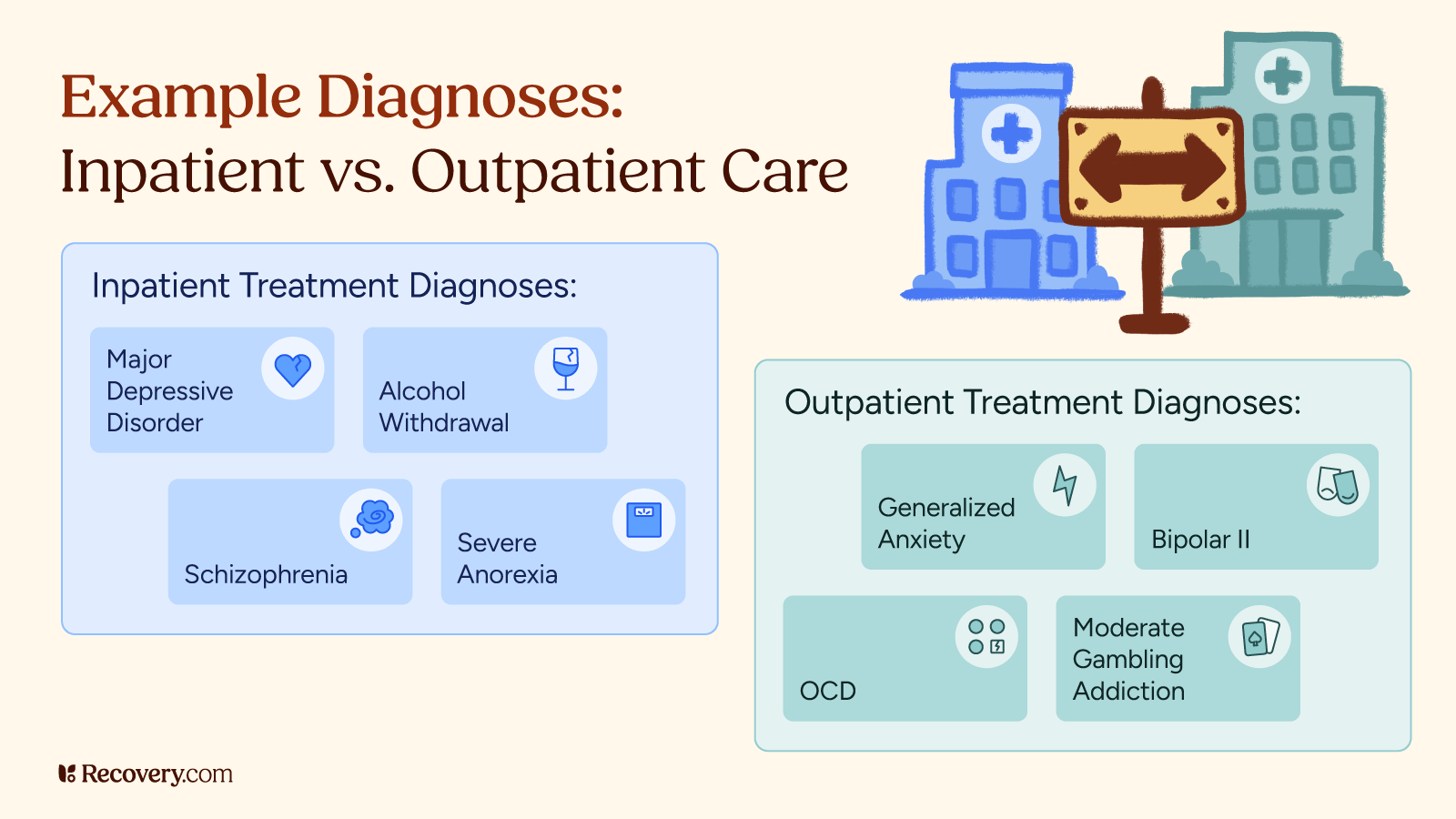
Examples of inpatient treatment include:
- Emergency surgeries and complications
- Treatment for substance use disorders in residential rehab
- Psychiatric hospitalization for severe mental health conditions like depressive disorders or other conditions5
- Care following a heart attack or stroke
- Complex surgeries requiring postoperative monitoring
- Stabilization for high-risk pregnancies
These services take place in inpatient facilities like hospitals, behavioral health centers, or residential treatment programs.
What common misconceptions do patients or families have about outpatient mental health treatment compared to inpatient services?

What Is Outpatient Care?
Outpatient care, also called ambulatory care, involves medical services that do not require a hospital stay.6,7 These include checkups, consultations, diagnostic tests such as CT scans, MRIs, x-rays, mammograms, and lab tests, as well as minor surgeries, colonoscopy, and outpatient mental health treatment.
Outpatient services are typically less intensive and more cost-effective than inpatient options. They can be provided in a variety of settings including doctor’s offices, community health clinics, and outpatient programs within larger healthcare systems. Outpatient care is especially beneficial for individuals who have a stable support system at home and don’t require 24/7 medical supervision.
What are the most critical factors in determining whether someone needs inpatient vs. outpatient care?

What Are Some Examples of Outpatient Care?
Examples of outpatient services include:
- Routine checkups and screenings
- Outpatient surgery like hernia repair or cataract removal
- Lab tests, x-rays, and MRIs
- Therapy sessions and mental health treatment
- Follow-up visits after hospitalization
- Treatment programs for mild substance abuse issues
- Follow-up care after acute psychiatric condition8
These services help manage health issues without requiring patients to stay in a hospital overnight.
What Determines if You Need Inpatient vs. Outpatient Care?
St. George’s University School of Medicine shares that there may be a “gray area” when it comes to determining if inpatient or outpatient care is needed, but treatment and other medical providers can help.9
“While there’s a clear difference between an inpatient and an outpatient, there is a little bit of gray area as well. Occasionally, physicians will assign a patient observation status while they determine whether hospitalization is required. This period typically lasts for no more than 24 hours.”
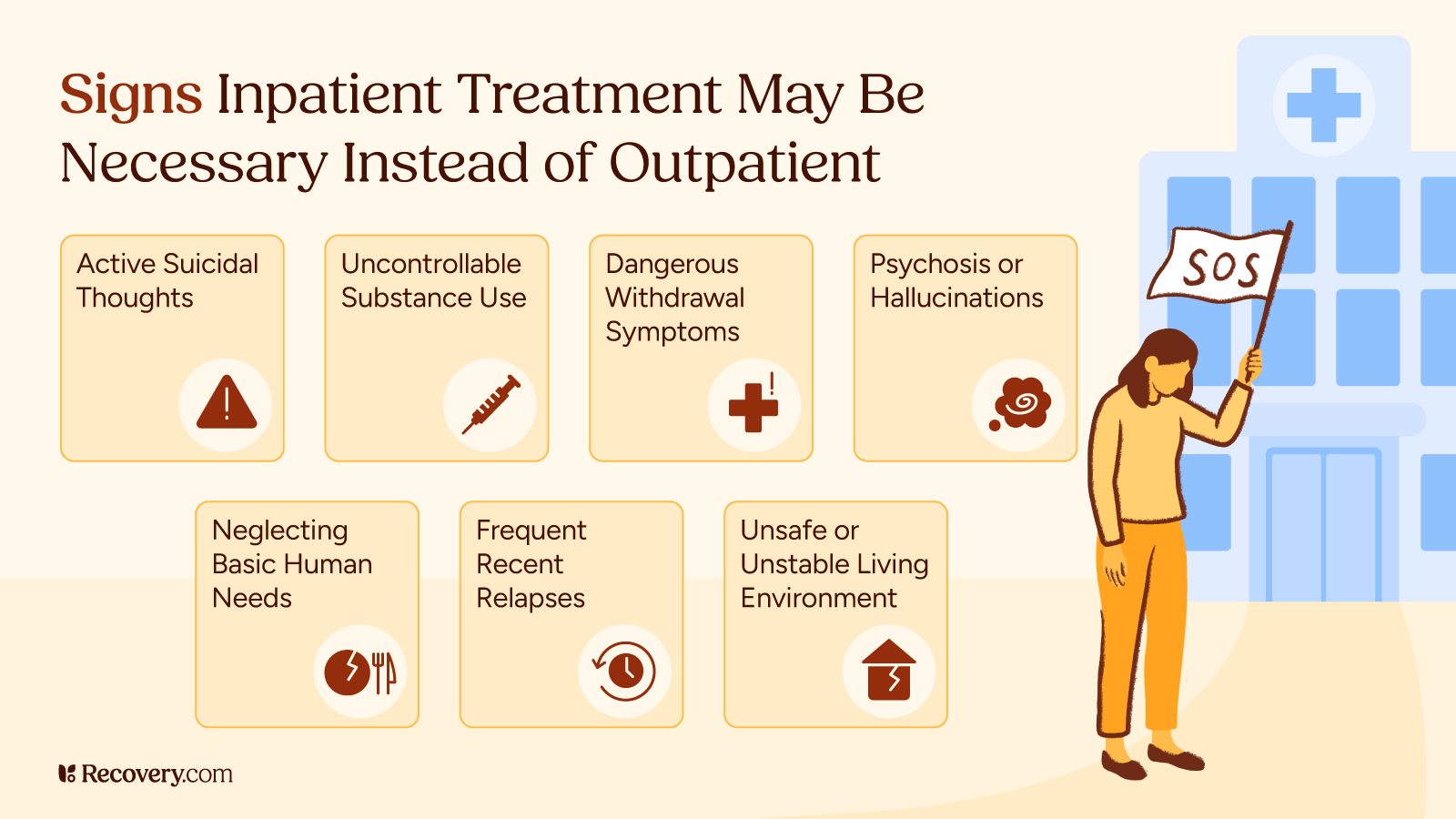
Several factors influence whether a patient needs inpatient or outpatient care:
- Severity of the condition: Life-threatening or complex conditions often require inpatient care.
- Type of treatment: Procedures that require intensive monitoring or specialized support usually involve hospitalization.
- Mental health needs: Acute mental health disorders or crises may necessitate inpatient stabilization.
- Recovery and support: Those without a safe home environment may benefit from the structured setting of an inpatient facility.
- Recommendations from healthcare providers: Ultimately, medical professionals will assess and recommend the best type of care based on your specific needs.
What Are the Costs for Outpatient vs. Inpatient?
In general, inpatient care is significantly more expensive than outpatient care due to the costs associated with a hospital stay, including meals, facility use, and continuous medical supervision. Outpatient treatment is usually more affordable, especially for routine or preventive care.10 That said, the total cost of either option depends on:
- Type of treatment or procedure
- Length of hospital stay
- Facility and provider fees
- Diagnostic or imaging services (e.g., CT scans, mammograms)
- Insurance coverage and co-pays
How have you seen transitions between inpatient and outpatient care impact long-term recovery outcomes for clients with chronic illness or mental health challenges?

Do You Have Coverage for Inpatient vs. Outpatient Health Care?
Most health insurance plans provide some level of coverage for both inpatient and outpatient care, but the details can vary. It’s important to:
- Check your plan’s insurance coverage for both inpatient programs and outpatient programs
- Understand your deductible, co-pay, and out-of-pocket maximums
- Get pre-authorization when required, especially for inpatient treatment
Many insurance providers categorize care based on medical necessity and type of treatment, so having a clear diagnosis and documented provider recommendation is essential. Some plans offer more generous coverage for preventive health services, like screenings and wellness checkups, which are typically done on an outpatient basis.
Understanding the difference between inpatient and outpatient care is crucial for making the right treatment decisions.
Each offers distinct benefits, and your choice should be guided by the severity of your health condition, the type of care required, and guidance from trusted healthcare providers. There may also be situations or conditions that benefit from an inpatient to outpatient transition.11
Whether you’re facing a medical emergency, managing chronic illness, or navigating mental health challenges, knowing your options can help you choose the right path to recovery.
There Is Hope for Recovery
Addiction is treatable, and a life of freedom is possible. Connect with drug and alcohol treatment centers that specialize in your specific needs, from holistic care to medication-assisted treatment. Don’t wait another day to get help; find a recovery program that works for you.
FAQs
-
1. Cotie, L. M., Pakosh, M., & Ghisi, G. L. M. (2024). Inpatient vs. Outpatient: A Systematic Review of Information Needs throughout the Heart Failure Patient Journey. Journal of clinical medicine, 13(4), 1085. https://doi.org/10.3390/jcm13041085
-
2. Schneeberger, A. R., Werthmueller, S., Barco, S., & Heuss, S. C. (2023). Patients' preference regarding inpatient versus outpatient setting - A systematic review. The International journal of health planning and management, 38(5), 1409–1419. https://doi.org/10.1002/hpm.3669
-
3. National Alliance on Mental Illness. (n.d.). The value of structured outpatient treatment. NAMI. https://www.nami.org/treatment/the-value-of-structured-outpatient-treatment/
-
4. National Institute on Drug Abuse. (2014). Principles of adolescent substance use disorder treatment: A research-based guide. National Institutes of Health. https://www.ncbi.nlm.nih.gov/books/NBK144006/
-
5. Hogue, A., Henderson, C. E., Becker, S. J., & Knight, D. K. (2018). Evidence base on outpatient behavioral treatments for adolescent substance use: Progress in community practice settings. BMC Psychiatry, 18, Article 77. https://doi.org/10.1186/s12888-019-2371-5
-
6. Definitive Healthcare. (n.d.). Outpatient care. https://www.definitivehc.com/resources/glossary/outpatient-care
-
7. Institute for Patient- and Family-Centered Care. (n.d.). Defining ambulatory care. https://www.ipfcc.org/bestpractices/ambulatory-care/defining-ambulatory-care.html
-
8. Tönnies, J., Ayoub-Schreifeldt, M., Schrader, V., Hartmann, M., Wild, B., Friederich, H. C., & Haun, M. W. (2023). From inpatient to outpatient mental health care: Protocol for a randomised feasibility trial of a care transition intervention for patients with depression and anxiety (the AMBITION-trial). PloS one, 18(11), e0291067. https://doi.org/10.1371/journal.pone.0291067
-
9. St. George’s University. (2022, July 15). Inpatient vs. outpatient: What’s the difference? https://www.sgu.edu/school-of-medicine/blog/inpatient-versus-outpatient/
-
10. Huskamp, H. A., Busch, A. B., Souza, J., & Uscher-Pines, L. (2022). Treatment of opioid use disorder among commercially insured patients in the context of the COVID-19 pandemic. JAMA Network Open, 5(11), e2240294. https://doi.org/10.1001/jamanetworkopen.2022.40294
-
11. Tönnies, J., Ayoub-Schreifeldt, M., Schrader, V., Hartmann, M., Wild, B., Friederich, H. C., & Haun, M. W. (2023). From inpatient to outpatient mental health care: Protocol for a randomised feasibility trial of a care transition intervention for patients with depression and anxiety (the AMBITION-trial). PloS one, 18(11), e0291067. https://doi.org/10.1371/journal.pone.0291067


Our Promise
How Is Recovery.com Different?
We believe everyone deserves access to accurate, unbiased information about mental health and recovery. That's why we have a comprehensive set of treatment providers and don't charge for inclusion. Any center that meets our criteria can list for free. We do not and have never accepted fees for referring someone to a particular center. Providers who advertise with us must be verified by our Research Team and we clearly mark their status as advertisers.
Our goal is to help you choose the best path for your recovery. That begins with information you can trust.