- Addiction
- Mental Health
- About Us
Find Treatment By
Rehabs by Location


Find Treatment By
Learn
About Us
Recovery.com combines independent research with expert guidance on addiction and mental health treatment. Our mission is to help everyone find the best path to recovery through the most comprehensive, helpful network of treatment providers worldwide.
Advisory Council
Our advisory council brings together leaders in behavioral health, technology, and business. Their diverse expertise ensures our resources and product are innovative, evidence-based, and effective. They guide our mission as accomplished individuals dedicated to improving the landscape of addiction recovery and mental wellness.
Is Online Rehab Effective? 4 Benefits for Accessible, Flexible Recovery

Hannah is a holistic wellness writer who explores post-traumatic growth and the mind-body connection through her work for various health and wellness platforms. She is also a licensed massage therapist who has contributed meditations, essays, and blog posts to apps and websites focused on mental health and fitness.

Rajnandini is a psychologist (M.Sc. Psychology) and writer dedicated to making mental health knowledge accessible.

Hannah is a holistic wellness writer who explores post-traumatic growth and the mind-body connection through her work for various health and wellness platforms. She is also a licensed massage therapist who has contributed meditations, essays, and blog posts to apps and websites focused on mental health and fitness.
Rajnandini is a psychologist (M.Sc. Psychology) and writer dedicated to making mental health knowledge accessible.
Table of Contents
- What Telehealth? Understanding Virtual Addiction Treatment
- Benefits and Limitations of Virtual Treatment
- Is Online Therapy Private? HIPAA and Confidentiality in Virtual Treatment
- 4 Key Benefits of Virtual Addiction Treatment
- Potential Drawbacks to Consider
- Is Online Rehab Right for You? When Virtual Treatment Works Best
Many people hesitate to start rehab because residential treatment programs feel inaccessible. Fortunately, they’re not the only option. More and more rehab programs now offer treatment via telehealth.
The popularity of telemedicine has skyrocketed in the past few years.1 It’s clear to see why this type of treatment became important in 2020: online appointments allow people in recovery to get the care they need, without taking unnecessary risks. Online treatment programs also limit the number of people on-site at a rehab facility, protecting both staff and patients.
However, online mental health treatment isn’t just for times of quarantine. Even before COVID-19 made social distancing a primary concern, “telehealth initiatives provided a platform to combat the shortcomings of cost, quality, and access ingrained in American health care.”2 Online therapy is a vital component of accessibility. Oftentimes, those who most need treatment also have the hardest time traveling to see a healthcare provider. For these patients, telemedicine makes it possible for them to get much-needed care.
What Telehealth? Understanding Virtual Addiction Treatment
Telehealth, or online medical care, is an especially valuable resource for vulnerable populations. Substance use disorders can affect anyone, including elderly and immunocompromised patients, those with mobility issues, and people whose schedules make in-person therapy impossible. For example, a CEO or high-level executive might be able to take an hour-long break for a therapy session, but unable to take 3 hours off so they can commute to and from the office.
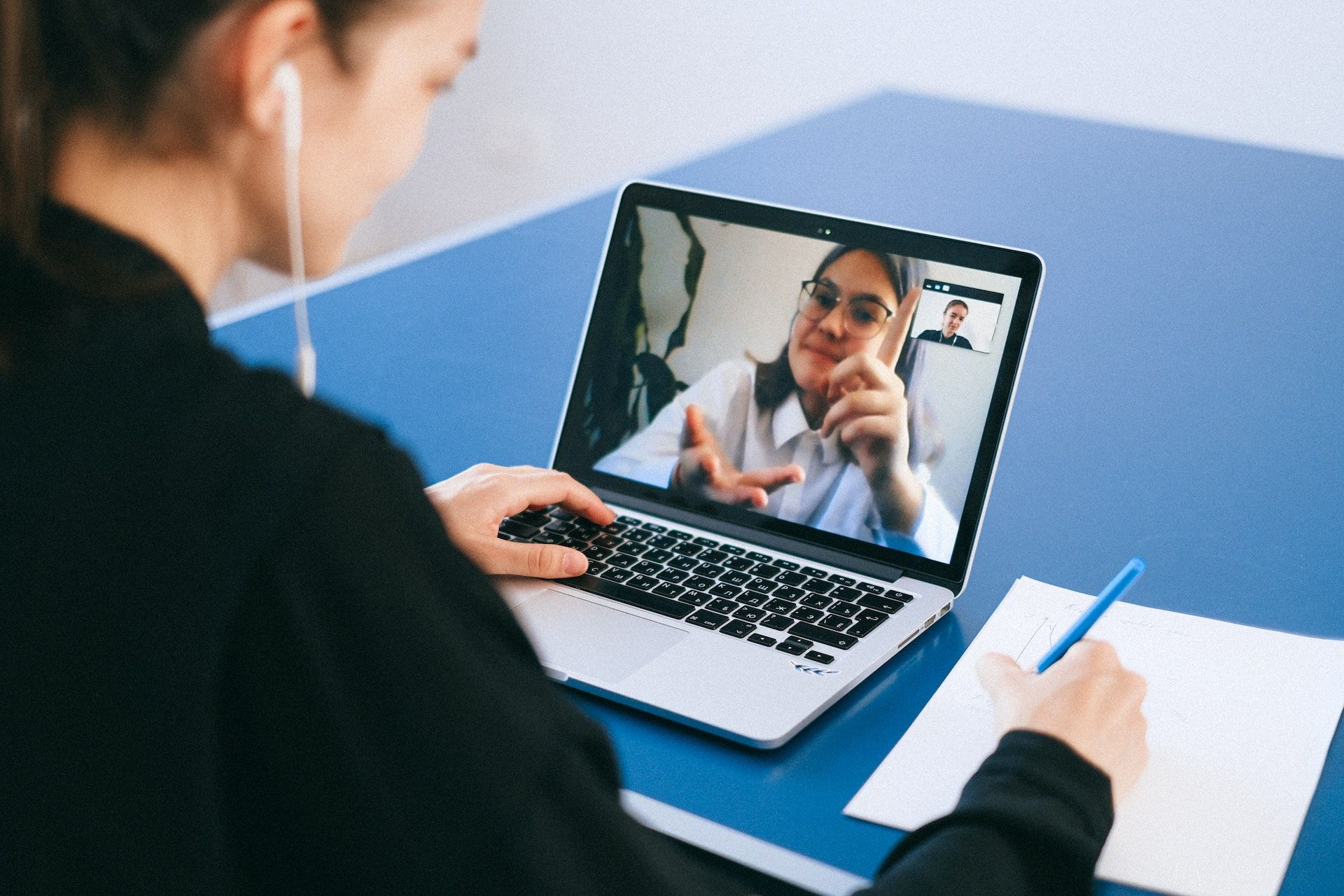
When you think of online addiction treatment, you may imagine something like a Zoom call, with the patient and provider talking through a screen. That’s certainly a big part of telemedicine, and most talk therapy sessions do fall into this category. But there’s much more to online healthcare than video chat.
Telemedicine can include any type of online health management.3 For example, you might track your daily caloric intake through an app and share it with your nutritionist, or you might communicate with your psychiatrist via email. Many patients opt in to text message reminders about upcoming appointments. All of these fall under the umbrella of online healthcare.
Benefits and Limitations of Virtual Treatment
Like any other form of communication, online rehab has its pros and cons—it’s certainly not appropriate for everyone. However, the very act of considering online therapy is an opportunity for you to evaluate your own priorities. By deciding whether online therapy is right for you, you’ll likely learn more about what you need out of any treatment program.
Explore Virtual Treatment Centers
Is Online Therapy Private? HIPAA and Confidentiality in Virtual Treatment
Many patients are rightfully concerned with their privacy, and the confidentiality of the therapy they receive. And of course, any kind of online communication has an inherent security risk. A hacker is unlikely to get their hands on any information you share in person, behind closed doors, with no recording devices in the vicinity. Thankfully, several regulations control the privacy of patients’ health history.
HIPAA Protections Apply to Online Therapy
Most of the time, healthcare providers are legally obligated to protect any patient data obtained during treatment, whether that treatment occurs online or in person. However, some of these rules have changed since the pandemic. In the U.S., for example, the government has allowed more flexibility to healthcare providers who are moving their practices online. In some cases, lawmakers may be more lenient regarding HIPAA regulations for telehealth.4 This is intended to make virtual treatment accessible for patients whose providers may not have been set up for online healthcare prior to COVID. It gives doctors and counselors a little more leeway, so they don’t have to stop seeing patients entirely while they learn how to use various online platforms.
How to Ensure Your Privacy in Virtual Treatment
It’s likely that these regulations will change over time, as we continue to adjust to this new era. Patients engaged in online addiction treatment programs should stay apprised of this. Ideally, you’ll check in with your providers on a regular basis to make sure that their specific practices meet your needs for confidentiality.
Feeling safe with your therapist is paramount; a lack of trust will almost certainly interfere with your recovery. Step one, as always, is to find the right type of treatment and the right provider for you. After that, there are still a number of factors to consider as you decide if telemedicine is a good fit.
4 Key Benefits of Virtual Addiction Treatment
1. Accessibility
Online therapy is one of the most accessible forms of healthcare. All you need is an internet connection and a computer, tablet, or even a phone. You’ll be able to contact your medical team from home, from the office, or from the other side of the world. You won’t have to cancel appointments if you’re sick, or if the weather is bad. It also allows for more flexible scheduling, because it completely eliminates travel time.
2. Accountability
Some patients, especially those who are new to recovery, may struggle to make and keep their appointments. This can be especially true if in outpatient treatment. If your appointments happen virtually, you’ll have fewer excuses to cancel. If you forget an appointment, some therapists will call or text you a reminder. Then, instead of having to reschedule or pay for unused time, you’ll be able to hop on the call within just a few minutes.
3. Group Dynamics
Online mental health treatment makes it possible for patients to engage in group therapy with people who are physically distant. Clinical Director Brenna Gonzalez explains how The Hope House Scottsdale uses technological tools for long-distance family therapy:
“The theatre room is equipped with telehealth equipment, so we can include family members in a client’s treatment program. Returning home to family support is really important, so it’s key to ensure family members understand what’s going on with their loved ones during treatment.”

4. Continuity of Care
Virtual therapy appointments often allow you to stay in contact with the same treatment team even when you move from one location to another. This is especially important for patients who travel to residential rehab in another state or country, and want to proceed to an aftercare program at the same rehab center when they return home.
At some rehabs, online treatment is a routine component of aftercare. Ryan Soave, the Director of Program Development at All Points North Lodge, describes the role telehealth plays in their continuing care:
“In our full continuum of care, people come out of detox into our residential facility, then they step down to the partial hospitalization program, all the way through into intensive outpatient and the telehealth program.”
Not every rehab facility offers this. Some programs may suggest you engage in online aftercare with the same facility, but a different medical team. If you live in the U.S. and travel to another state for rehab this can get especially complicated, as the U.S. has strict laws governing therapy for out-of-state patients.5 Make sure to learn what your options are before you begin inpatient therapy, so you’ll know what to expect going forward.
Potential Drawbacks to Consider
Limited Physical Care
Virtual therapy can address many serious issues, and may be appropriate for some physical exams. However, it has noteworthy limitations when it comes to physical care, especially in the treatment of substance use disorders. For example, it’s not an effective way to perform medical detox. That process should be closely supervised by an in-person team of doctors and nurses.
Even patients who have already completed detox may still benefit from in-person care. One major drawback of online treatment is that online appointments don’t allow doctors to monitor your vital signs or perform daily drug testing.6 This aspect of accountability can be very important for people who are new to treatment, and losing access to it can severely impact the recovery process.
Confidentiality
Although providers are ethically obligated to protect their patients’ data, breaches can and do occur. In telehealth appointments, you may be responsible for some aspects of online security.7 Your device or your home network may not be entirely secure, even if your therapist’s data is.
Lack of Experiential Therapy
Online therapy is an effective way to talk to a therapist or other provider. However, there are many powerful and effective types of therapy that can only happen in person. During on-site or inpatient treatment, you may have access to art therapy, group activities, and even massage or acupuncture. Experiential therapy can greatly benefit your physical and mental health.8 These opportunities invite patients to learn about healthy social dynamics while creating happy memories. And it’s just not possible to go whitewater rafting via video chat!
Is Online Rehab Right for You? When Virtual Treatment Works Best
Because of its physical limitations, some patients may benefit from telemedicine as part of a combination approach to recovery. You may choose to see some providers online and others in person. You may plan to maintain long-distance therapeutic relationships after complete inpatient treatment. If you’re interested in online therapy, be sure to talk to your medical team and ask whether they think it might be right for you.
Before you begin this type of online treatment, take some time to understand your own interest in it. Recovery is a time to reconnect with yourself and to start building healthy relationships. For some people, virtual treatment programs are appealing mostly because it allows you to stay in isolation. If that’s true for you, it might not be the best fit.
If you have other concerns—such as physical health issues, scheduling, or various forms of accessibility—don’t let the perfect be the enemy of the good. For many people, online appointments are the only way to access high-quality care. If in-person treatment just isn’t an option for you, telehealth may make it possible for you to begin recovery.
Ready to Explore Online Treatment Options?
View and connect with rehabs that offer online servicesto find out if this format is a good fit for you.
FAQs
-
Koonin, L. M. (2020). Trends in the use of telehealth during the emergence of the covid-19 pandemic—United states, January–March 2020. MMWR. Morbidity and Mortality Weekly Report, 69. https://doi.org/10.15585/mmwr.mm6943a3. https://www.cdc.gov/mmwr/volumes/69/wr/mm6943a3.htm
-
Roberts, N. T.-L., Jack Karsten, and Jordan. (2020, May 6). Removing regulatory barriers to telehealth before and after COVID-19. Brookings. https://www.brookings.edu/research/removing-regulatory-barriers-to-telehealth-before-and-after-covid-19/
-
"Telehealth: Technology meets health care." Mayo Clinic. https://www.mayoclinic.org/healthy-lifestyle/consumer-health/in-depth/telehealth/art-20044878
-
Legal considerations | Telehealth.HHS.gov. https://telehealth.hhs.gov/providers/legal-considerations/
-
“What to Know about Doing Telehealth in a Different State.” APA Services. https://www.apaservices.org/practice/legal/technology/telehealth-different-state
-
Knopf, A. (2020). Addiction telemedicine comes into its own with COVID-19. Alcoholism & Drug Abuse Weekly, 32(13), 5–6. https://doi.org/10.1002/adaw.32673. https://onlinelibrary.wiley.com/doi/full/10.1002/adaw.32673
-
Hale, T. M., & Kvedar, J. C. (2014). Privacy and security concerns in telehealth. AMA Journal of Ethics, 16(12), 981–985. https://doi.org/10.1001/virtualmentor.2014.16.12.jdsc1-1412. https://journalofethics.ama-assn.org/article/privacy-and-security-concerns-telehealth/2014-12
-
Lebow J. (ed.) Twenty-first century psychotherapies (Wiley, 2008). https://www.nzdr.ru/data/media/biblio/kolxoz/B/BH/Lebow%20J.%20(ed.)%20Twenty-first%20century%20psychotherapies%20(Wiley,%202008)(ISBN%200471752231)(O)(520s)_BH_.pdf#page=90
















Our Promise
How Is Recovery.com Different?
We believe everyone deserves access to accurate, unbiased information about mental health and recovery. That's why we have a comprehensive set of treatment providers and don't charge for inclusion. Any center that meets our criteria can list for free. We do not and have never accepted fees for referring someone to a particular center. Providers who advertise with us must be verified by our Research Team and we clearly mark their status as advertisers.
Our goal is to help you choose the best path for your recovery. That begins with information you can trust.