- Addiction
- Mental Health
- About Us
Find Treatment By
Rehabs by Location


Find Treatment By
Learn
About Us
Recovery.com combines independent research with expert guidance on addiction and mental health treatment. Our mission is to help everyone find the best path to recovery through the most comprehensive, helpful network of treatment providers worldwide.
Advisory Council
Our advisory council brings together leaders in behavioral health, technology, and business. Their diverse expertise ensures our resources and product are innovative, evidence-based, and effective. They guide our mission as accomplished individuals dedicated to improving the landscape of addiction recovery and mental wellness.
Nitrous Addiction: Knowing These Risks Could Save Your Life

Kayla holds nearly a decade of experience in the rehab space, including in-house content management at a leading treatment center and founding a rehab-specialized content agency. She believes addiction and mental health issues are universal human experiences that can serve as important entry points onto a path toward self-realization and well-being.

Dr. Mala, is the Chief Clinical Officer at Recovery.com, where she develops impartial and informative resources for people seeking addiction and mental health treatment.
Kayla holds nearly a decade of experience in the rehab space, including in-house content management at a leading treatment center and founding a rehab-specialized content agency. She believes addiction and mental health issues are universal human experiences that can serve as important entry points onto a path toward self-realization and well-being.
Dr. Mala, is the Chief Clinical Officer at Recovery.com, where she develops impartial and informative resources for people seeking addiction and mental health treatment.
Table of Contents
- What Is Nitrous Oxide and How Do People Use It Recreationally?
- Can You Really Get Addicted to Laughing Gas?
- What Does Nitrous Oxide Do to Your Brain and Body?
- The Hidden Dangers of Whippet Addiction
- How to Tell If Your Nitrous Use Is Becoming a Problem
- Addiction Treatment and Recovery
- Harm Reduction: Staying Safer if You're Not Ready to Stop
- Ready to Take Control? Help Is Available
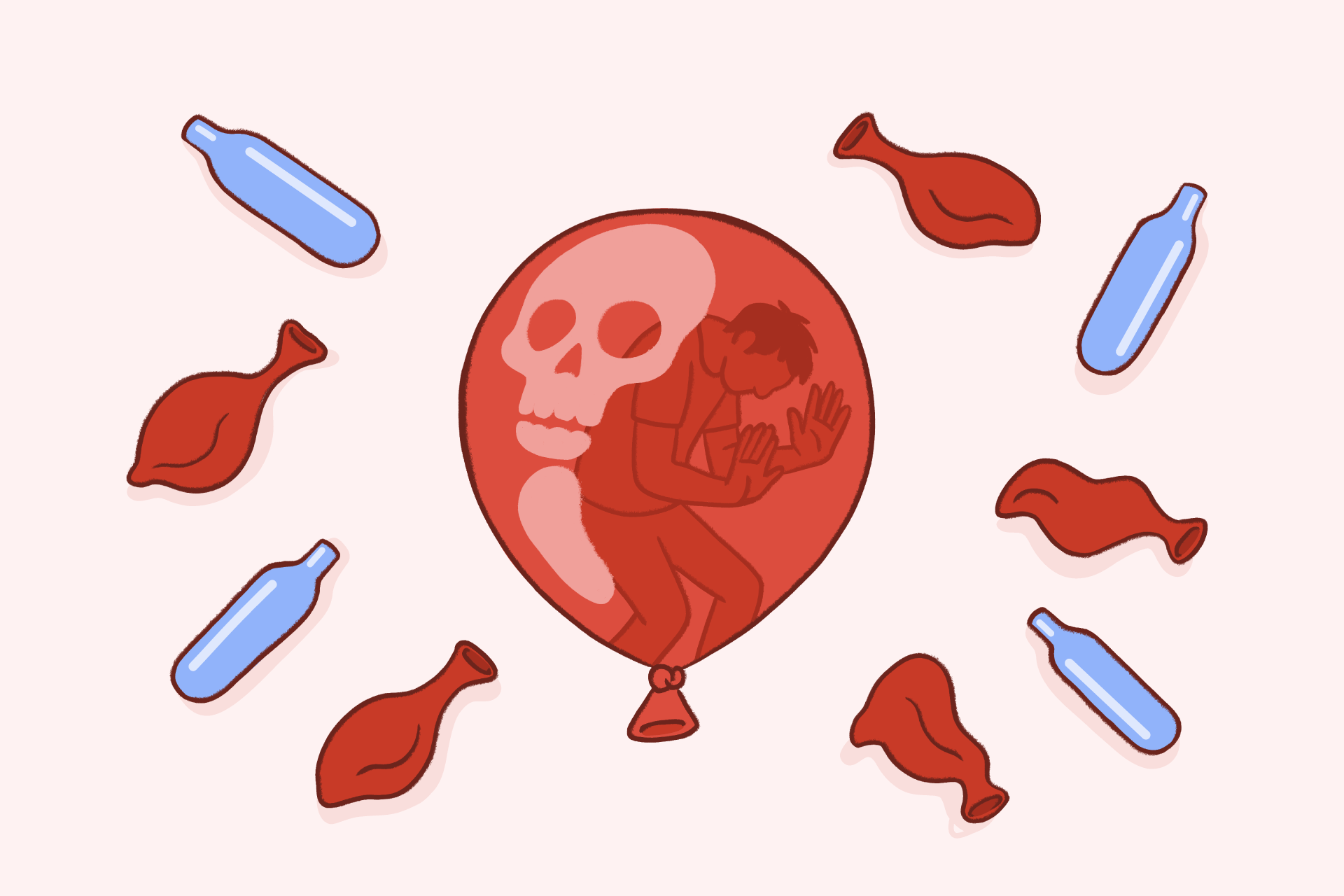
You might know nitrous oxide as the gas that helps you relax at the dentist's office, but this seemingly harmless substance is also used recreationally—sometimes with serious consequences. Also called "laughing gas," "whippets," or "nos," nitrous oxide is increasingly being used outside of medical settings for its dissociative and giggly effects.
Many people assume nitrous oxide is safe because it's used in medical procedures, but they may not fully understand the risks of recreational use. The gas that’s designed to make dental work more comfortable can actually lead to dangerous health complications, addiction-like behaviors, and even life-threatening scenarios when it’s used without the supervision of a medical expert.
We look at how nitrous affects your brain, its short- and long-term effects, risks, and how you can effectively address nitrous addiction if you feel like your use has gotten out of control.
What Is Nitrous Oxide and How Do People Use It Recreationally?
Nitrous oxide (N₂O) is a colorless, sweet-smelling gas.1 In medical and dental settings, it's carefully administered for anesthesia and pain relief to help patients feel more comfortable during procedures. When it’s used properly by healthcare professionals, nitrous oxide has a sound safety record and provides effective relief from anxiety and discomfort.2
But this inhalant has also become popular for recreational use, where it goes by various names like "whippets," "nos," "laughing gas," "nangs," “hippie crack,” or simply "balloons." These nicknames often reflect how people use nitrous outside of medical settings.
Explore Drug Addiction Treatment Centers
Cartridges (Whippits) and Tanks
The most common way people take nitrous oxide recreationally is through whipped cream dispensers and small metal cartridges called "whippits" or "nangs." In the US, these cartridges are sold legally as they’re intended for culinary use. Some people also obtain larger tanks of medical-grade nitrous oxide, though this is both illegal and extremely dangerous due to the high pressure that can cause severe lung damage and the risk of inhaling fatal amounts without oxygen.3
What makes nitrous oxide appealing to recreational users is its fast onset and short duration of effects. But this seemingly easy or convenient high comes with risks people don't fully understand. The controlled medical environment where nitrous oxide is safely used is vastly different from recreational settings where there are no proper safety measures.
Can You Really Get Addicted to Laughing Gas?
Nitrous oxide doesn't create the same physical dependence as substances like alcohol or opioids, but addiction to laughing gas absolutely does exist.4
When we talk about nitrous oxide addiction, we're primarily discussing psychological dependence. People can develop a compulsive urge to use nitrous oxide repeatedly, and they often increase their use over time. This happens because, as with any kind of drug abuse, nitrous triggers the brain's reward system to release pleasure chemicals and generate feelings users want to recreate.
A combination of factors makes nitrous oxide especially addictive for some people:
- The effects are intense but short-lived (only a few minutes), meaning people often have cravings to use repeatedly in a single session.
- The accessibility and perceived safety can lower barriers to regular use.
Certain people face higher risks for developing problematic nitrous oxide use:
- Young adults whose brains are still developing
- People with existing mental health conditions
- Those who already struggle with substance abuse
- People seeking escape from stress or emotional pain
It's important to note that just because something doesn't cause severe physical withdrawal doesn't mean it can't become a serious problem. A lot of people who use nitrous regularly find that it negatively affects their lives, which is a clear sign of addiction regardless of the substance involved.
What Does Nitrous Oxide Do to Your Brain and Body?
To understand why nitrous oxide causes the effects it does, it helps to know how it works in your brain. Nitrous oxide is an NMDA receptor antagonist, meaning it blocks certain communication pathways in your brain that are responsible for pain perception, memory, and consciousness.5
When you inhale nitrous oxide, the effects kick in almost immediately. Most people describe it as a combination of euphoria, relaxation, and dissociation from their surroundings. You might feel like you're floating, have an altered perception of sound (often described as a "wah-wah" effect), or feel detached from your body. Some people laugh uncontrollably, which is where the "laughing gas" nickname comes from.
This high usually only lasts about 2–5 minutes with nitrous from small cartridges, though the aftereffects can linger a little longer.
Passing Out on Nitrous
One of the most dangerous aspects of nitrous oxide use is how frequently people lose consciousness. Passing out while using nitrous is extremely common, especially when people use multiple canisters or don't get enough oxygen between uses. The sudden lack of oxygen, combined with drops in blood pressure, makes passing out on nitrous especially dangerous. When you lose consciousness, you risk serious injuries from falls, choking, or continuing to inhale nitrous without realizing it.
What many people don't realize is that recreational nitrous oxide use can cause dangerous oxygen deprivation, especially when inhaled without adequate oxygen or in confined setups like bags or masks.6 While nitrous oxide itself has anesthetic properties that contribute to its dissociative effects, the real danger comes from hypoxia: low levels of oxygen in your lungs and bloodstream. Your brain needs a constant supply of oxygen to function properly, and oxygen deprivation can cause permanent brain damage. Repeated use compounds this risk significantly.
The Hidden Dangers of Whippet Addiction
While nitrous might seem relatively casual, it actually carries serious risks that many people don't anticipate.
Immediate Dangers
- Oxygen deprivation that can cause lasting brain damage
- Loss of consciousness resulting in falls and serious injuries
- Asphyxiation from using bags or masks to inhale
- Frostbite on lips, throat, or lungs from cold gas
Long-Term Consequences
- Depletion of vitamin B12, which is essential for nervous system function
- Tingling, weakness, and difficulty walking
- Neurological damage that can progress over weeks, with some deficits potentially becoming permanent7
- Blood clot formation (including deep vein thrombosis, pulmonary embolism, heart attack, and stroke) due to B12 deficiency affecting blood chemistry8
- Memory loss
- Lung damage from repeated cold gas exposure
Most frightening is the risk of sudden death, which can happen even with first-time use. The combination of oxygen deprivation, unconsciousness, and accidents creates potentially fatal scenarios that users simply don't expect.
How to Tell If Your Nitrous Use Is Becoming a Problem
You may already be questioning your relationship with nitrous oxide. That awareness itself is important and shows you're paying attention to how substances affect your life. But because nitrous use is often seen as casual in social settings, it can be hard to tell when it’s becoming a problem.
Start by asking yourself these questions honestly:
- Do you find yourself using nitrous more often than you originally planned?
- Do you feel anxious or upset when you can't get it?
- Are you spending money on nitrous that you need for other things?
- Have you continued using despite having moments that scared you, like passing out or falling?
- Are you using alone or hiding drug use from people close to you?
- Has nitrous use affected your work, school, or relationships?
Physical Symptoms
- Any tingling, numbness, or weakness in your hands, feet, or face
- Difficulty walking or maintaining balance (these symptoms often reflect neuropathy—damage to peripheral nerves or even the spinal cord)
- Frequent headaches, dizziness, or light-headedness
- Injuries from falls while using
If you answered yes to several of these questions or are experiencing physical symptoms, your nitrous use is likely becoming problematic. The good news is that recognizing these patterns early gives you the best chance of successfully stopping. You don't have to wait until things get worse to address the issue.
Addiction Treatment and Recovery
While nitrous oxide doesn't typically cause severe physical withdrawal symptoms, overcoming the psychological aspects of substance use disorder often requires both professional support and sustainable lifestyle changes.
Medical Treatment for Physical Symptoms
If you're experiencing physical symptoms like tingling, weakness, or walking difficulties from nitrous oxide misuse, you should seek immediate medical attention. The first-line treatment involves completely stopping the use of nitrous oxide and starting high-dose vitamin B12 injections.9 Your doctor will monitor specific blood markers (methylmalonic acid and homocysteine levels) to track your recovery. It's important to note that taking folate supplements alone can mask certain blood changes while nerve damage continues to progress, which is why proper medical supervision is essential.
Evidence-Based Therapies
Evidence-based treatment options might include:
- Cognitive behavioral therapy (CBT) to identify triggers and develop coping strategies
- Motivational interviewing to help you find your own reasons for change
- Dialectical behavior therapy (DBT) for emotional regulation skills
A lot of people also find they benefit from group therapy and support groups where they can connect with others facing similar challenges.
Complementary Treatments
Complementary therapies like mindfulness meditation, yoga, and creative expression are additional tools that can help you manage stress without substances.
Long-Term Lifestyle Changes
Lifestyle changes are an important part of lasting recovery. Since nitrous oxide abuse often happens in party environments, you might find yourself reevaluating your social circle, how you spend your free time, and what truly matters to you. Many people actually find that recovery is a great opportunity to build meaningful relationships and pursue interests that genuinely fulfill them instead of just providing a temporary escape.
Harm Reduction: Staying Safer if You're Not Ready to Stop
If you're not ready to quit using nitrous oxide completely, there are ways to reduce your risk of serious harm. These steps can help protect you while you consider your options:
- Always use nitrous while sitting down to prevent dangerous falls if you lose consciousness.
- Never use alone—have someone sober present who can help if something goes wrong.
- Never use bags, masks, or inhale directly from pressurized tanks, which dramatically increase risks.
- Seek medical help immediately if you have numbness, weakness, or difficulty walking.
Remember, these steps reduce risk but don't eliminate it entirely. The safest choice is to stop using.
Ready to Take Control? Help Is Available
Nitrous use can be very risky even in the short term, and long-term use can noticeably affect your life. If you’re having a hard time stopping, professional support can make that process feel a lot more doable, and help you address issues underlying these behaviors to set you up for long-term mental and physical health.
Find a treatment center near you to talk to an advisor today.
FAQs
-
Sethi, A., Bhalla, S., & Gupta, K. (2020). Basic properties of nitrous oxide gas. In K. Gupta, D. Emmanouil, & A. Sethi (Eds.), Nitrous oxide in pediatric dentistry (pp. 45–75). Springer. https://doi.org/10.1007/978-3-030-29618-6_2. https://link.springer.com/chapter/10.1007/978-3-030-29618-6_2
-
Kanagasundaram SA, Lane LJ, Cavalletto BP, et alEfficacy and safety of nitrous oxide in alleviating pain and anxiety during painful proceduresArchives of Disease in Childhood 2001;84:492-495. https://adc.bmj.com/content/84/6/492.short
-
van Amsterdam JG, Nabben T, van den Brink W. Increasing recreational nitrous oxide use: Should we worry? A narrative review. Journal of Psychopharmacology. 2022;36(8):943-950. doi:10.1177/02698811221082442. https://journals.sagepub.com/doi/abs/10.1177/02698811221082442
-
Back S, Kroon E, Colyer-Patel K, Cousijn J. Does nitrous oxide addiction exist? An evaluation of the evidence for the presence and prevalence of substance use disorder symptoms in recreational nitrous oxide users. Addiction. 2024; 119(4): 609–618. https://doi.org/10.1111/add.16380. https://onlinelibrary.wiley.com/doi/full/10.1111/add.16380
-
Jevtović-Todorović, V., Todorovć, S., Mennerick, S. et al. Nitrous oxide (laughing gas) is an NMDA antagonist, neuroprotectant and neurotoxin. Nat Med 4, 460–463 (1998). https://doi.org/10.1038/nm0498-460. https://www.nature.com/articles/nm0498-460
-
Michigan Department of Health and Human Services. (2025, June 4). Health emergencies linked to recreational nitrous oxide use increase significantly. Michigan.gov. https://www.michigan.gov/mdhhs/inside-mdhhs/newsroom/2025/06/04/nitrous-oxide
-
Paris A, Lake L, Joseph A, Workman A, Walton J, Hayton T, Evangelou N, Lilleker JB, Ayling RM, Nicholl D, Noyce AJ. Nitrous oxide-induced subacute combined degeneration of the cord: diagnosis and treatment. Pract Neurol. 2023 Jun;23(3):222-228. doi: 10.1136/pn-2022-003631. Epub 2023 Feb 22. PMID: 36813556; PMCID: PMC10313972. https://pmc.ncbi.nlm.nih.gov/articles/PMC10313972/
-
Caris MG, Kuipers RS, Kiestra BE, Ruijter BJ, Riezebos RK, Coppens M, Mooij HL. Nitrous oxide abuse leading to extreme homocysteine levels and thrombosis in young adults: a case series. J Thromb Haemost. 2023 Feb;21(2):276-283. doi: 10.1016/j.jtha.2022.10.002. Epub 2022 Dec 22. PMID: 36700505. https://pubmed.ncbi.nlm.nih.gov/36700505/
-
De Halleux C, Juurlink DN. Diagnosis and management of toxicity associated with the recreational use of nitrous oxide. CMAJ. 2023 Aug 21;195(32):E1075-E1081. doi: 10.1503/cmaj.230196. PMID: 37604519; PMCID: PMC10442242. https://pmc.ncbi.nlm.nih.gov/articles/PMC10442242/
-
Razaq J, Qureshi S. Recreational nitrous oxide abuse causing B12 deficiency with subacute combined degeneration of the spinal cord: A case report. J Family Med Prim Care. 2020 Nov 30;9(11):5772-5775. doi: 10.4103/jfmpc.jfmpc_1630_20. PMID: 33532431; PMCID: PMC7842470. https://pmc.ncbi.nlm.nih.gov/articles/PMC7842470/


















Our Promise
How Is Recovery.com Different?
We believe everyone deserves access to accurate, unbiased information about mental health and recovery. That's why we have a comprehensive set of treatment providers and don't charge for inclusion. Any center that meets our criteria can list for free. We do not and have never accepted fees for referring someone to a particular center. Providers who advertise with us must be verified by our Research Team and we clearly mark their status as advertisers.
Our goal is to help you choose the best path for your recovery. That begins with information you can trust.