- Addiction
- Mental Health
- About Us
Find Treatment By
Rehabs by Location


Find Treatment By
Learn
About Us
Recovery.com combines independent research with expert guidance on addiction and mental health treatment. Our mission is to help everyone find the best path to recovery through the most comprehensive, helpful network of treatment providers worldwide.
Advisory Council
Our advisory council brings together leaders in behavioral health, technology, and business. Their diverse expertise ensures our resources and product are innovative, evidence-based, and effective. They guide our mission as accomplished individuals dedicated to improving the landscape of addiction recovery and mental wellness.
Porn Addiction: 9 Signs and How It Impacts Your Well-Being

Caroline Beidler, MSW is an author, speaker, and the Managing Editor of Recovery.com. She writes about topics related to addiction, mental health, and trauma recovery, informed by her personal experience and professional expertise.

Dr. Mala, is the Chief Clinical Officer at Recovery.com, where she develops impartial and informative resources for people seeking addiction and mental health treatment.
Caroline Beidler, MSW is an author, speaker, and the Managing Editor of Recovery.com. She writes about topics related to addiction, mental health, and trauma recovery, informed by her personal experience and professional expertise.
Dr. Mala, is the Chief Clinical Officer at Recovery.com, where she develops impartial and informative resources for people seeking addiction and mental health treatment.
Porn addiction, like other behavioral addictions, can negatively impact mental health, relationships, and daily life. But how do you know if you have a problem? Are there signs that can help you determine if you or a loved one has a porn addiction?
If this issue impacts you, a loved one, or friend, you are not alone. Recognizing the signs of porn addiction is the first step in seeking professional help and treatment options.
What are the top 10 signs of pornography addiction, and how do they affect your well-being?
1. You Can’t Stop
One of the most evident signs of porn addiction is the inability to stop viewing pornography despite repeated attempts. This compulsive behavior can interfere with daily life, relationships, and responsibilities. Individuals may experience withdrawal symptoms, such as mood swings and cravings, when trying to cut back.1
Research suggests that behavioral addictions like pornography addiction activate the same reward pathways in the brain as substance addictions, making compulsive use a serious concern.2
Recognizing the signs of porn addiction is the first step toward recovery.
2. You Want More
Pornography consumption can lead to tolerance, similar to substance addiction. Over time, an individual may seek out more explicit or extreme pornographic content to achieve the same level of excitement. This escalation can reinforce dependency and increase the risk of sexual dysfunction.
Social media can also promote unrealistic standards of physical attractiveness and sex, making the lure from these sites to pornographic ones a quick one.
Pornography can create a vicious cycle in the brain, largely due to its impact on dopamine, the neurotransmitter responsible for pleasure and motivation.3
- When someone watches porn, their brain releases a surge of dopamine, leading to intense feelings of reward. However, overstimulation can cause the brain to downregulate dopamine receptors—essentially, reducing their sensitivity to dopamine over time.3
- As a result, the person may start feeling depleted or less satisfied with the same content, leading them to seek out more stimulating material or spend longer periods watching porn to achieve the same high. This is similar to what happens in substance addiction, where repeated exposure leads to tolerance and an increased need for stronger stimuli.4
3. You’ve Lost Time
Pornography use is on the rise due to a number of factors including “accessibility, affordability, and anonymity.”5 Many people report losing track of time, which affects productivity, work performance, and personal relationships. Excessive time spent on porn use can lead to neglecting important daily responsibilities.
- Over time, a pattern of pornography use can make it harder to enjoy everyday pleasures, as the brain becomes wired to seek its dopamine fix through pornography rather than real-life experiences.
- Some studies suggest that excessive porn use may even contribute to issues like desensitization, difficulty in forming relationships, and sexual dysfunction.
- In short, by constantly chasing the dopamine high, some people find themselves caught in an escalating loop—needing more extreme content or longer sessions just to feel the same level of excitement, all while their brain becomes less responsive to natural rewards.
4. You’ve Lost Interest in Sex
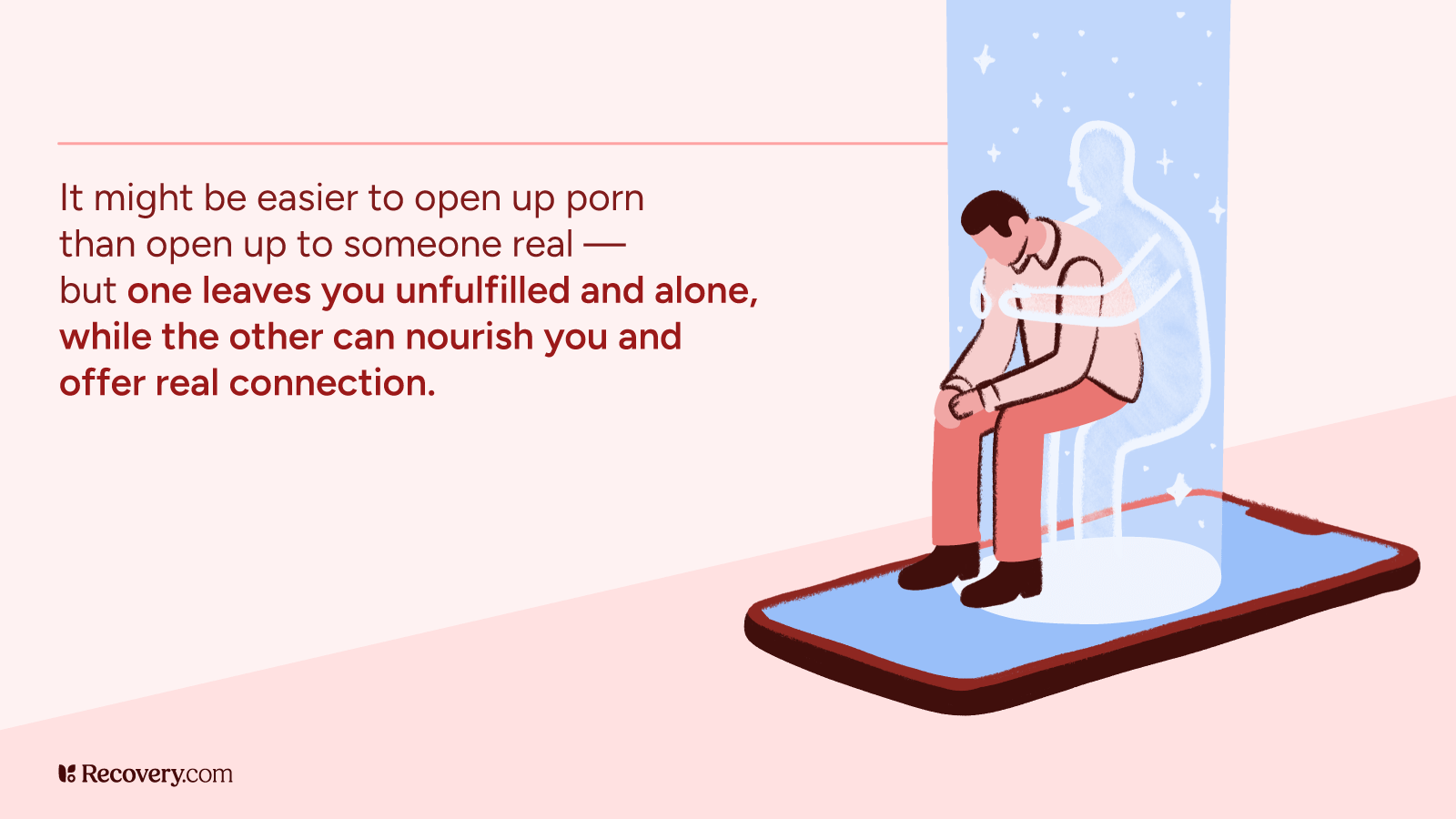
Frequent viewing of pornographic material can lead to a decline in real-life sexual relationships. Unrealistic expectations created by pornography consumption may result in reduced attraction to a loved one, leading to intimacy issues and relationship problems.
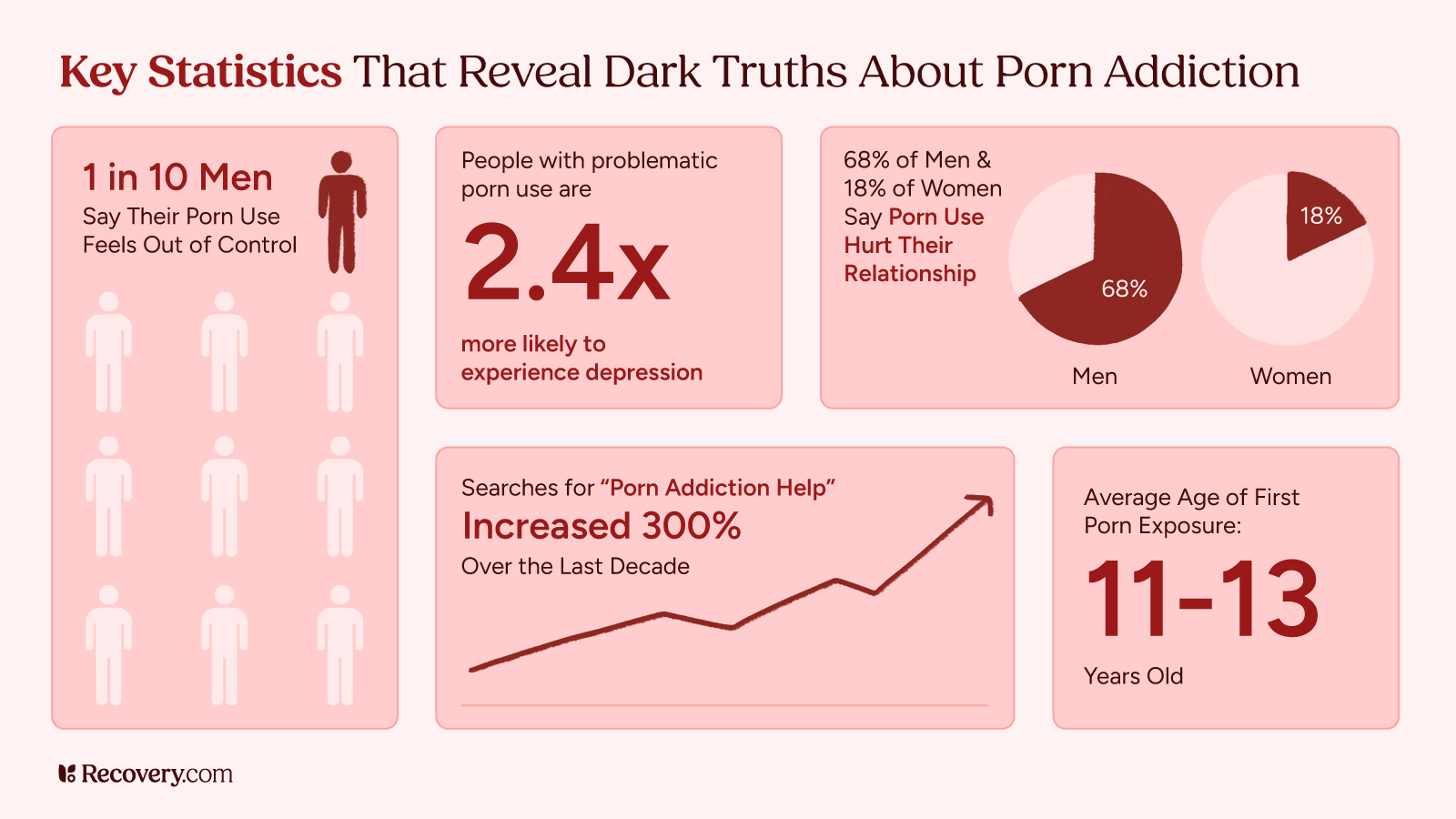
- The Journal of Sex Research notes that porn websites are more frequently visited than any other type of website on the internet and for a longer duration of time.6
- The current market value of the porn industry is expected to surpass one billion dollars annually and has experienced a 58% growth in the market since 2018.7 These are overwhelming statistics that highlight the prevalence and availability of porn that competes with real-life sexual relationships.
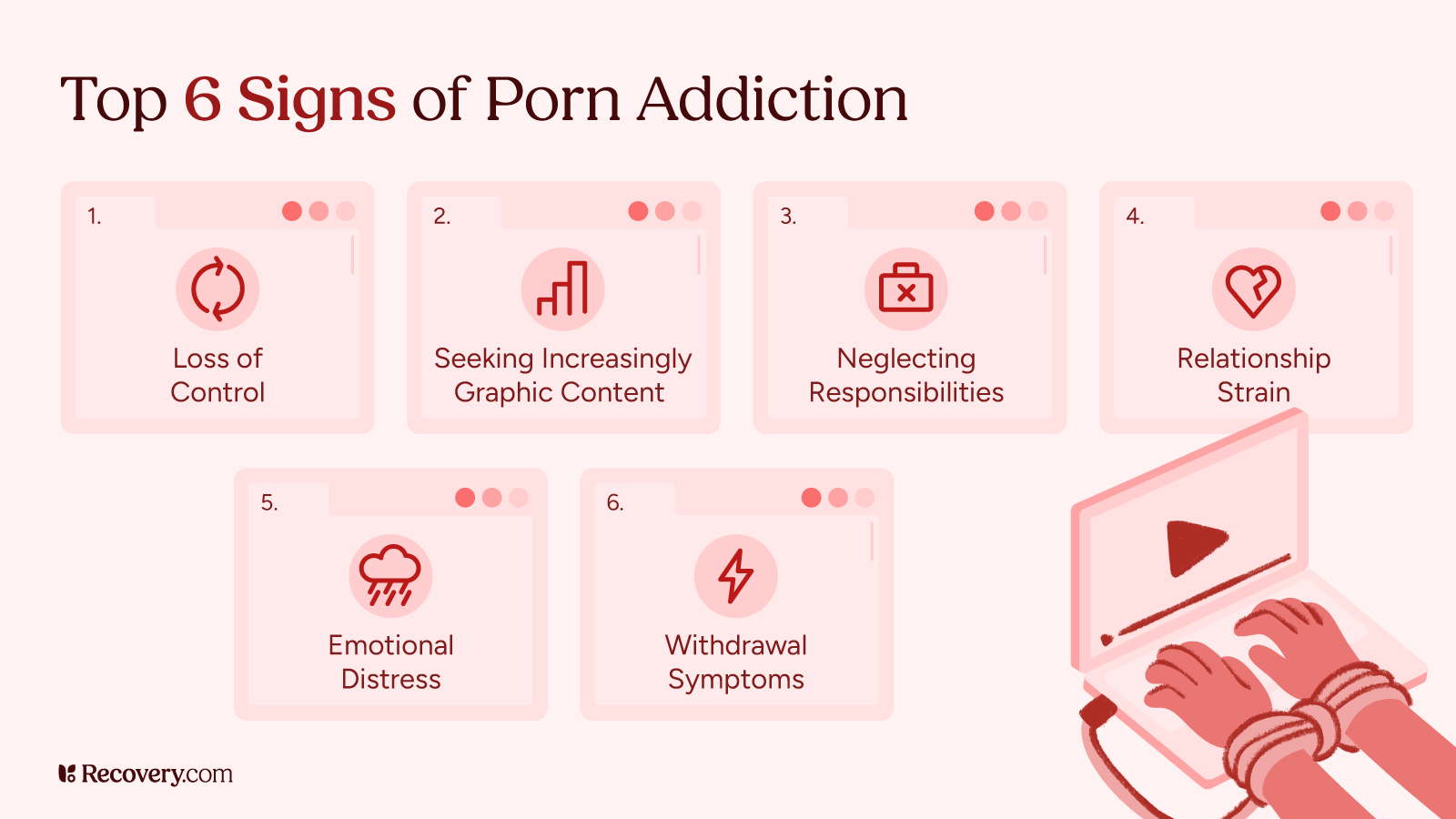
5. You’re More Demanding
As porn addiction progresses, individuals may develop unrealistic expectations of sexual activities. They may pressure their partner into engaging in behaviors seen in pornographic content, leading to dissatisfaction and strain in romantic relationships.
- Porn use becomes a coping mechanism that creates mental health issues and disrupts and replaces natural sexual behavior. While porn addiction is not officially recognized as a diagnosis in the DSM-5 (Diagnostic and Statistical Manual of Mental Disorders, Fifth Edition), it does not mean that it does not significantly impact relationships and cause mental health conditions.
- While the DSM-5 doesn’t classify it as an addiction, the World Health Organization’s ICD-11 (International Classification of Diseases) does recognize compulsive sexual behavior disorder (CSBD),9 which can include problematic porn use.8
So, while there’s still debate over whether “porn addiction” is the right term, research suggests that compulsive porn use can have real effects on mental health and behavior.
6. You’ve Lost Attraction
Another warning sign of porn addiction is a loss of attraction to a romantic partner. The overstimulation of the brain’s reward system due to frequent viewing of pornography can alter real-life perceptions of beauty and desirability, affecting the ability to maintain healthy relationships.6
- Sexual health is impacted in a way that influences romantic relationships in real life. Social media can also play a role in disrupting healthy, human relationships. Struggling with porn addiction can also lessen the amount of time spent with partners in romantic relationships.
- Young adults are also impacted by symptoms of porn addiction like mental health disorders and low self-esteem.

7. You’re Losing Money
Some people who struggle with pornography addiction may spend significant amounts of money on subscriptions, premium content, or even engaging in online sexual activities.
This financial strain can impact daily life, leading to stress and potential conflicts with a family member or loved one. Use of pornography can also have a heavy financial burden, with some sites requiring increasing fees for use.
8. You’re Distracted
In today’s digital age, pornography is more accessible than ever, making it easy to develop compulsive behaviors without realizing the impact on mental health, relationships, self-esteem, and daily life.
While many people consume porn casually, for some, it becomes a habit that feels impossible to break. If you’ve ever found yourself struggling to stop, needing increasingly explicit content, or noticing a decline in real-life intimacy or continual distraction, you’re not alone.
Porn addiction can make it difficult to focus on tasks, leading to decreased productivity and performance at work or school. Individuals may frequently think about viewing porn, leading to an inability to concentrate on important responsibilities.

9. You’re Angry
Feelings of guilt, shame, and frustration can contribute to increased irritability and anger in individuals struggling with pornography addiction. Withdrawal symptoms from excessive porn use may lead to mood swings, emotional instability, and relationship problems.
Research suggests that when people become deeply engrossed in internet pornography, their brains react in a way similar to substance addiction—certain neural pathways light up, triggering a direct and intense response to the content.9
- Just like in drug addiction, watching porn releases a surge of dopamine, the brain’s pleasure and reward chemical, reinforcing the habit and making it harder to stop.
- However, over time, dopamine receptors become less responsive, meaning the same content no longer provides the same thrill. This can lead to frustration, irritability, and even anger issues, especially when a person tries to cut back or when real-life experiences don’t match the high of pornography.
Some studies even link compulsive porn use to emotional dysregulation, making individuals more prone to mood swings and impulsivity.
In extreme cases, this cycle of addiction and emotional instability can increase aggression, particularly when someone experiences withdrawal-like symptoms from trying to quit or faces obstacles to accessing porn. This makes it even harder to break free from the cycle, as stress and negative emotions can push them back toward their habitual coping mechanism—watching more porn.
Talking About Porn Addiction
Discussing pornography addiction can be challenging, especially for individuals who experience feelings of guilt or shame. Support groups such as
Sex and Love Addicts Anonymous (S.L.A.A.) can provide a safe space for people to share their struggles and receive guidance from others who have faced similar challenges.
Porn addiction is often linked with other behavioral addictions and substance use disorders, such as alcohol addiction and drug dependency.
Research suggests that behavioral addiction, like pornography addiction, affects the same brain regions as substance addiction, reinforcing compulsive behavior.10
Seeking Treatment and Recovery
Overcoming pornography addiction requires a combination of self-awareness, support, and professional intervention. Treatment options such as CBT, psychotherapy, and addiction treatment programs can help individuals break free from compulsive pornography use and improve their quality of life.
Recognizing the signs of porn addiction is the first step toward recovery. By seeking help and implementing positive changes, individuals can restore their well-being, maintain healthy relationships, and regain control over their lives.
Porn addiction can feel isolating, but recovery is possible with the right support and strategies. Recognizing the signs of problematic use is the first step toward making meaningful changes. Help and treatment are available.
Overcoming compulsive pornography use isn’t just about quitting—it’s about regaining control, rebuilding healthy relationships, and improving overall well-being.
If you or someone you know is struggling, seeking help is a courageous step toward a healthier and more fulfilling life. Explore porn addiction rehabs now and speak to an admissions specialist today.
Explore Pornography Addiction Treatment Centers
FAQs
-
Gola, M., Lewczuk, K., Skorko, M., Wierzba, M., & Sescousse, G. (2022). Withdrawal and tolerance as related to compulsive sexual behavior disorder and problematic pornography use: Preregistered study based on a nationally representative sample in Poland. PLOS ONE, 17(3), e0265053. https://doi.org/10.1371/journal.pone.0265053. https://pmc.ncbi.nlm.nih.gov/articles/PMC9881655/
-
Bőthe, B., Tóth-Király, I., Potenza, M. N., Orosz, G., & Demetrovics, Z. (2020). How much online pornography is too much? A comparison of two theoretically distinct assessment scales. Journal of Behavioral Addictions, 9(3), 628–640. https://doi.org/10.1556/2006.2020.00050. https://pmc.ncbi.nlm.nih.gov/articles/PMC11137999/
-
Jha, A., & Banerjee, D. (2022). Neurobiology of sex and pornography addictions: A primer. Indian Journal of Psychiatry, 64(5), 490–495. https://doi.org/10.4103/indianjpsychiatry.indianjpsychiatry_620_21. https://journals.sagepub.com/doi/10.1177/26318318221116042
-
Kühn, S., & Gallinat, J. (2014). Brain structure and functional connectivity associated with pornography consumption: The brain on porn. JAMA Psychiatry, 71(7), 827–834. https://doi.org/10.1001/jamapsychiatry.2014.93. https://jamanetwork.com/journals/jamapsychiatry/fullarticle/1874574
-
Grubbs, J. B., Perry, S. L., Wilt, J. A., & Reid, R. C. (2020). Online porn addiction: What we know and what we don’t—A systematic review. Archives of Sexual Behavior, 49, 3311–3325. https://doi.org/10.1007/s10508-020-01774-6. https://pmc.ncbi.nlm.nih.gov/articles/PMC6352245/
-
Sun, C., Bridges, A. J., Johnson, J. A., & Ezzell, M. B. (2023). But do porn sites get more traffic than TikTok, OpenAI, and Zoom? The Journal of Sex Research, 60(6), 715–725. https://doi.org/10.1080/00224499.2023.2172627. https://www.tandfonline.com/doi/full/10.1080/00224499.2023.2220690
-
Statista. (2023). Value of the porn websites industry in the U.S. 2023. https://www.statista.com/statistics/1347817/porn-website-industry-market-size-us/. https://www.statista.com/statistics/1371582/value-online-website-porn-market-us/
-
World Health Organization. (2019). International classification of diseases for mortality and morbidity statistics (11th Revision). https://icd.who.int/en. https://www.who.int/standards/classifications/classification-of-diseases
-
Love, T., Laier, C., Brand, M., Hatch, L., & Hajela, R. (2015). Neuroscience of internet pornography addiction: A review and update. Behavioral Sciences, 5(3), 388–433. https://doi.org/10.3390/bs5030388. https://www.mdpi.com/2076-328X/5/3/388?form=MG0AV3
-
Nestler, E. J. (2014). Transcriptional and epigenetic mechanisms of addiction. Nature, 13(11), 664–672. https://doi.org/10.1038/nrn3786. https://pmc.ncbi.nlm.nih.gov/articles/PMC3272277/


















Our Promise
How Is Recovery.com Different?
We believe everyone deserves access to accurate, unbiased information about mental health and recovery. That's why we have a comprehensive set of treatment providers and don't charge for inclusion. Any center that meets our criteria can list for free. We do not and have never accepted fees for referring someone to a particular center. Providers who advertise with us must be verified by our Research Team and we clearly mark their status as advertisers.
Our goal is to help you choose the best path for your recovery. That begins with information you can trust.